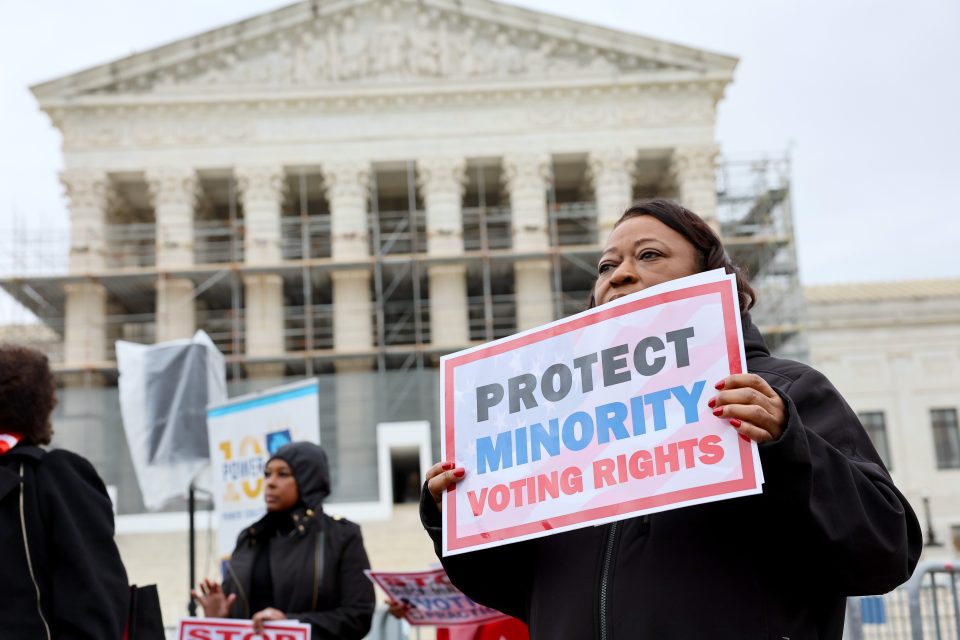
Minority voters in the U.S. face limited options to combat racial discrimination in redistricting following recent Supreme Court decisions that undermine the Voting Rights Act. State-level voting rights acts and strategic map-drawing in Democratic-controlled states offer some protection but cannot fully replace federal provisions. The Supreme Court’s decision to allow Alabama to use a map deemed discriminatory against Black voters raises concerns about minority representation, particularly in Southern states. Advocates are pushing for state-level voting rights acts, but these laws face challenges and potential lawsuits. In Democratic states, partisan gerrymandering could be used to protect minority representation without sacrificing additional seats in Congress. Long-term solutions may require federal action, but bipartisan support has waned. Democrats aim to pass the John R. Lewis Voting Rights Advancement Act and explore judicial reforms if they regain control of Congress. Some propose structural changes like proportional representation to ensure fairer minority representation. Despite challenges, states and local communities are encouraged to pursue fairness in elections.
What alternatives remain for protecting minority voting rights?