

Bishkek is poised to become the most consequential diplomatic stage in Eurasia this week as leaders from China, Russia, India and Turkey converge for the Shanghai Cooperation Organization summit while the United States is represented only by a special envoy.
Chinese President Xi Jinping arrives in Kyrgyzstan on Aug. 30 for a state visit and will play a leading role in the SCO annual summit. Over three days Bishkek will host Xi as well as Russian President Vladimir Putin, Indian Prime Minister Narendra Modi, Turkish President Recep Tayyip Erdogan and, notably, only a U.S. special envoy. Aug. 31, when many summit guests pour into the city, also marks Kyrgyzstan’s Independence Day and the opening of Bishkek Arena and the World Nomadic Games.
Gor, President Donald Trump’s highly active envoy, is the U.S. representative expected at the World Nomadic Games. His presence will ensure Washington is not entirely absent from the diplomatic spotlight; he is also expected to hold separate meetings with Kazakhstan’s President Kassym-Jomart Tokayev, Uzbekistan’s President Shavkat Mirziyoyev and host President Sadyr Japarov, according to a diplomatic source.
Central Asia has emerged as a new battleground in great-power competition because both the United States and China see the region as crucial to reducing vulnerabilities to each other. The source material notes that China needs Eurasian energy and transport corridors to lower its exposure to maritime chokepoints that could be blocked by the U.S. Navy in a contingency over Taiwan, while the United States needs the region’s critical minerals to reduce dependence on China.
With Russia preoccupied by the war in Ukraine, Beijing is seen as seeking to expand its influence in Central Asia. Central Asian governments are pursuing multi-vector foreign policies—relationships in every direction—and Kazakhstan has recently held a fresh round of elections, following constitutional reform intended to strengthen political stability and make decision-making more agile. The memory of January 2022, when unrest prompted President Tokayev to request help from the Russia-led Collective Security Treaty Organization, is cited as a reminder of how domestic instability can quickly create foreign dependence.
This week in Bishkek, China arguably has the upper hand: Xi attends as head of state while Washington sends only an envoy. The article argues that President Trump should change that next year and has a chance to become the first sitting U.S. president to visit Central Asia.
Samarkand as the ideal presidential visit
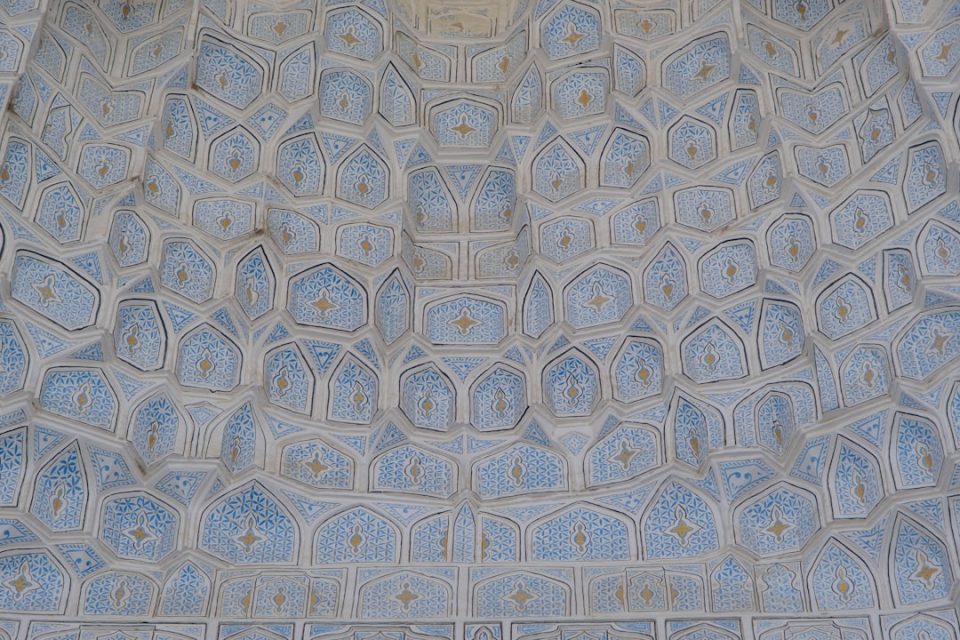
Samarkand, the ancient Silk Road crossroads, is identified as a particularly suitable destination. Secretary of State Marco Rubio is scheduled to travel to Samarkand, Uzbekistan, on Oct. 18 and 19 to meet Central Asian counterparts for a C5+1 meeting, according to Central Asian sources. The piece suggests that Astana and Tashkent would also be logical stops—respectively Kazakhstan’s and Uzbekistan’s capitals—but that Samarkand could offer an especially resonant photo op before Registan Square’s turquoise-domed madrassas, symbolizing respect for the Islamic world’s contributions to scholarship.
The argument presented is that a presidential visit to Samarkand would signal an American leader coming to do business rather than to lecture, wage war or demand allegiance, and that the United States does not need to dominate Central Asia but must ensure no other power does. The article closes with a literary allusion: “For lust of knowing what should not be known, we take the Golden Road to Samarkand,” a line by James Elroy Flecker, and the recommendation that next year the president of the United States should take that road. Beijing, the article warns, will be watching.
