

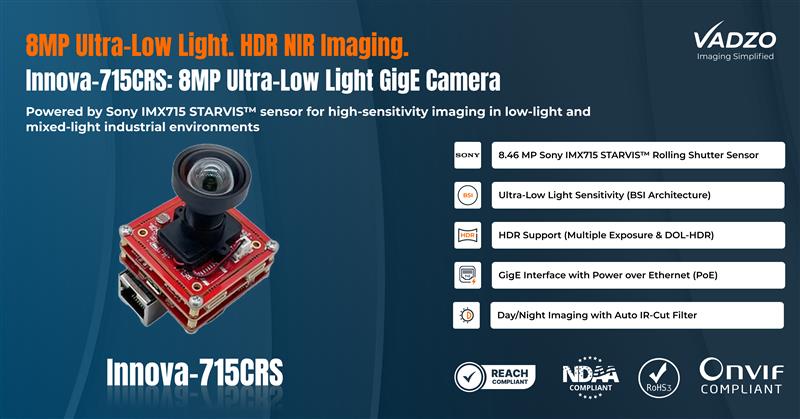
Low light imaging technologies have transformed modern imaging systems, enabling the capture of high sensitivity and resolution images in minimal lighting. These technologies are crucial in fields like surveillance, automotive night vision, industrial automation, medical imaging, military defense, consumer electronics, and scientific research. Innovations in CMOS, sCMOS, near-infrared sensors, and AI-based image enhancement are advancing image clarity, reducing noise, and optimizing system size and power efficiency.
The global low light imaging market, valued at USD 16.87 billion in 2025, is projected to reach USD 46.96 billion by 2035, growing at a compound annual rate of 10.78% from 2026 to 2035. This expansion is driven by the increasing deployment of advanced surveillance systems, the rise of automotive ADAS and autonomous vehicles, and the demand for machine vision and smart city technologies. Enhanced micro sensor structures, high dynamic range imaging, and near-infrared sensors are key contributors to this growth.
Leading companies like Sony Corporation, OmniVision Technologies, and Samsung Electronics are at the forefront of innovation in this sector. Sony excels in CMOS image sensor technology, OmniVision advances automotive and security imaging, and Samsung focuses on high-performance imaging and AI vision solutions. These firms are pioneering developments in HDR, LED flicker suppression, and AI-enhanced image processing, which are essential for applications in autonomous vehicles, smart surveillance, and more.
The future of low light imaging is promising, with continued advancements in CMOS and sCMOS technologies, AI algorithms, and miniaturized devices. As industries emphasize autonomous vehicles, smart cities, and enhanced security infrastructure, low-light imaging will play a crucial role in enhancing visibility and operational intelligence.
