

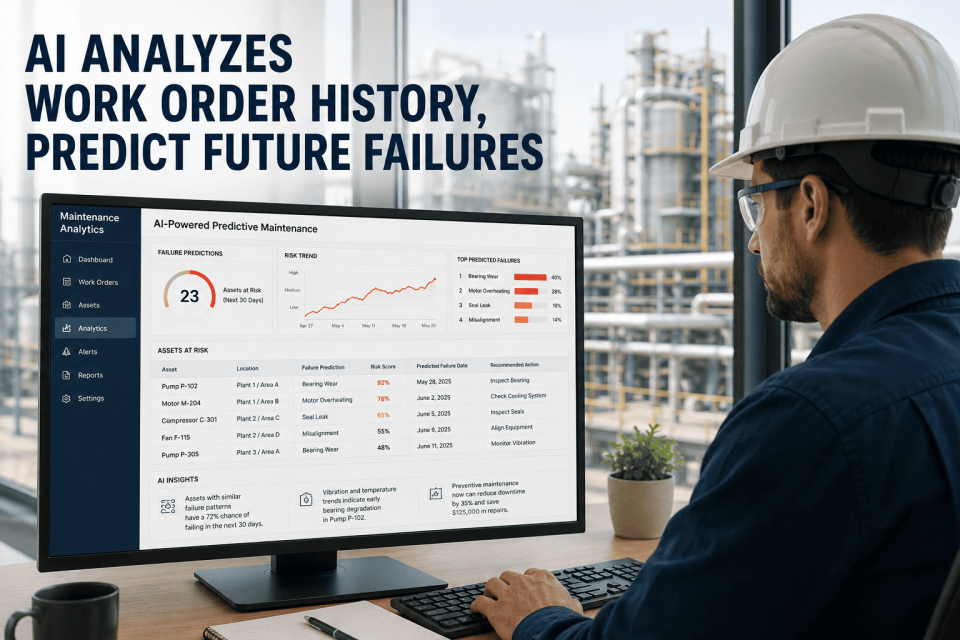
The 2026 construction jobsite is becoming a data-driven ecosystem where AI analytics, factory-connected equipment, and insurer-backed incentives intersect. Together, these trends promise faster decisions, fewer reworks, and a clearer financial case for deploying site-monitoring technology.
## Three forces reshaping the jobsite
AI analytics platforms turn camera and sensor feeds into actionable insight. Factory-integrated connected equipment embeds intelligence at the machine level to improve grade accuracy and reduce calibration overhead. Meanwhile, builders risk insurers are offering premium discounts to projects that adopt continuous monitoring, creating an immediate return on tech investments.
## From progress tracking to research-grade insight
New AI analytics tools are moving beyond simple percent-complete dashboards. By normalizing disparate sensor outputs and applying models tuned to construction workflows, these platforms surface root causes, predict delays, and prioritize corrective actions for field teams. The shift reduces reliance on periodic reports and enables real-time decisions that lower schedule risk and improve resource allocation.
## Owner-side software catches up
Owner-facing software suites are narrowing the gap with contractor tools. Integrated capital-program modules help owners manage multi-project portfolios with greater transparency and control. That alignment means owner and contractor systems must now share live data, creating pressure for interoperable APIs and data models that preserve context across procurement, change management, and delivery workflows.
## Factory-integrated connected equipment changes the buy decision
Connected machines that ship with native telematics and control integration alter the equipment selection calculus. For road and civil contractors, factory-level connectivity reduces the need for aftermarket sensors and simplifies data ownership, calibration, and accuracy. When connectivity arrives as a line item in procurement, contractors can weigh its downstream value — fewer reworks, tighter tolerances, and smoother compliance on public infrastructure projects — against upfront cost.
## Insurance discounts reframe the ROI
Builders risk underwriters have historically struggled to price construction exposures precisely. Continuous monitoring tools that detect anomalies — from water ingress to unauthorized access — provide underwriters with hard telemetry, enabling differentiated premiums. When insurers tie discounts directly to deployed monitoring, the payback period for site technology compresses, shifting procurement conversations from speculative productivity gains to concrete cost offsets.
## Integration is the practical challenge
With insights, machines, and insurance incentives advancing simultaneously, the practical hurdle is sequencing integration. IT and operations leaders face choices: deploy insurer-linked monitoring to capture immediate savings, implement AI analytics to optimize workflows, or invest in factory-connected equipment to reduce field variability. Each path offers value, but improperly stitched systems can create data silos and workflow friction.
## A pragmatic adoption roadmap
– Start with the financial lever: pilot continuous site-monitoring where insurers offer discounts to validate premium savings.
– Parallel-test AI analytics on projects with rich sensor and camera data to prove productivity and risk reduction.
– Factor connectivity into equipment replacement cycles; prioritize factory-integrated options where calibration and data quality matter most.
– Define interoperability requirements early: common APIs, a canonical data model, and clear ownership rules minimize long-term integration costs.
– Measure both hard and soft benefits: premium reductions, reduced rework, schedule adherence, and improved forecasting.
## What this means for teams
Procurement, finance, and operations should treat insurer-backed monitoring as a low-friction entry point that de-risks broader digital adoption. IT should establish integration guardrails now—data schemas, access controls, and reporting standards—to enable scaling. Vendors that can link machine telemetry, site monitoring, and analytics in an auditable chain will have a distinct advantage when organizations decide to move beyond pilots.
As these vectors converge, technology decisions will be judged not only on feature lists but on how they reduce risk and simplify operations. Projects that align monitoring, analytics, and connected equipment stand to shorten feedback loops, lower insurance costs, and accelerate the shift to real‑time construction management.
