

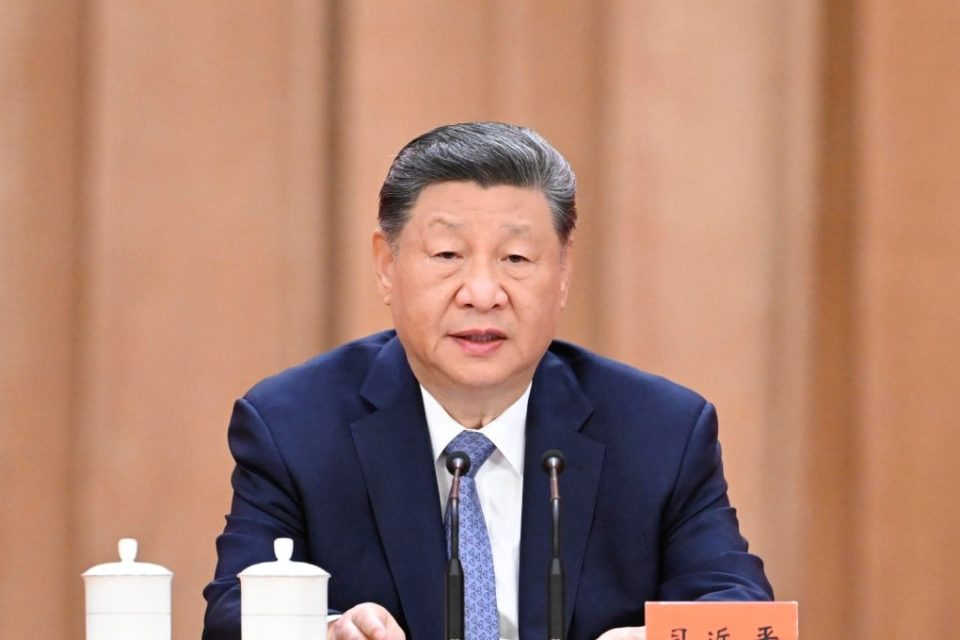
Xi Jinping will open the 2026 World Artificial Intelligence Conference in Shanghai and deliver a keynote — his first appearance at China’s flagship AI summit. The move elevates the event from industry showcase to a potential stage for a new model of international AI governance.
Xi’s keynote as a turning point
Xi’s presence changes the optics and the stakes. Traditionally represented by the premier at trade-oriented events, the Chinese leader’s attendance signals top-level prioritization of AI across ministries, provincial governments and state-backed capital.
A conference built for scale
Organizers expect over 1,400 guests, scores of government bodies and more than 300 global product debuts. Framed under the theme “AI Partnership for a Brighter Future,” the World Artificial Intelligence Conference blends exhibition hall spectacle with high-level diplomatic programming running 17–20 July.
A diplomatic meeting with an agenda
The accompanying High-Level Meeting on Global AI Governance is where substance matters. Designed to gather delegations and international organisations, it follows a Chinese-drafted agenda focused on institutional answers rather than technical standards alone.
The pitch: membership over restriction
China is advancing the idea of a World AI Cooperation Organization, proposed to be headquartered in Shanghai. It presents membership and access to Chinese-developed models as an alternative to the United States’ approach of export controls and restricted-entity lists. For many countries, the offer is simple: cheaper, more open models plus a seat at a new table.
Technology and commercial levers
Chinese labs now ship frontier-adjacent AI models at considerably lower cost than many US counterparts. Reports that DeepSeek is developing an inference chip with SMIC hint at efforts to mitigate US export controls — either a clever workaround or a move toward technical independence, depending on performance and scale.
Rhetoric, rivalry and practical limits
The US has publicly accused Chinese actors of distilling American models, while both governments warn domestic institutions against using each other’s AI on security grounds. Those verbal exchanges matter, but enforcement and technical verification remain difficult, keeping many practical questions unresolved.
What to watch in Shanghai
The crucial outcomes are twofold: whether Xi names the World AI Cooperation Organization formally, and whether any outside government commits to joining. Naming an institution would give the proposal shape; early members would test its diplomatic traction against Washington’s governance framework.
A clear domestic message
Beyond international theater, Xi’s appearance delivers a domestic directive: AI is now an area of top strategic priority. Ministries, state banks and local governments will read the keynote as a cue to accelerate funding, deployments and regulatory attention.
The week ahead will reveal whether the speech reshapes global governance or codifies an existing intent. Either way, Shanghai has staked its claim as China’s AI capital — and the summit will show whether that claim gains an international address.
