

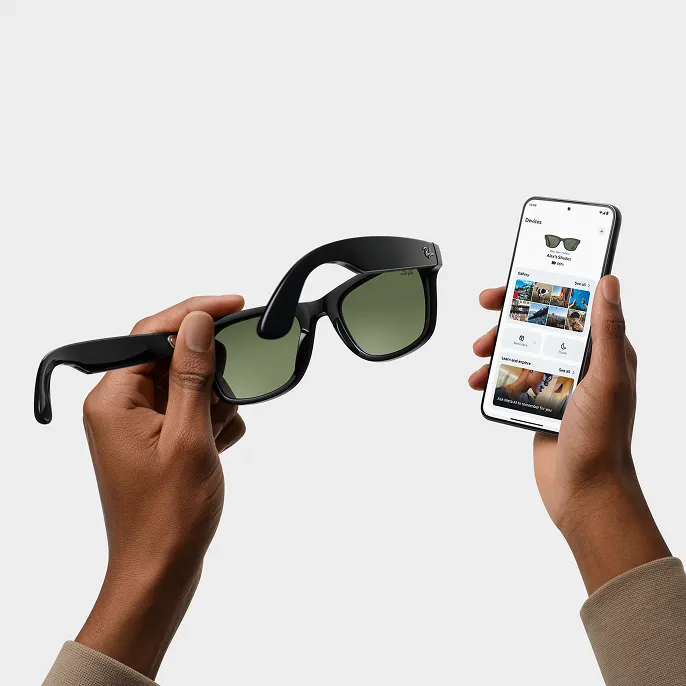
Apple is preparing an API that would let third‑party accessories—such as Meta’s Ray‑Ban Meta glasses and Quest headsets—pair seamlessly across a user’s Apple devices in the same way AirPods and Apple Watch do today. The feature is tied to infrastructure the company introduced to meet recent EU rules and is slated for a phased rollout.
What the new pairing will do
The API would allow cryptographic pairing material established on one iPhone or iPad to be usable on a user’s other Apple devices. That means a Meta accessory paired once could automatically appear as available across a user’s iPhone, iPad and potentially other Apple hardware without repeating the pairing flow.
How Apple plans to secure it
Apple intends to gate access behind a session key and a one‑time, per‑accessory user consent. The mechanism relies on AccessorySetupKit and Proximity Pairing, the same frameworks Apple built to comply with European interoperability requirements. The company says development should conclude by spring 2027, with deployment shortly after—likely as part of an iOS 27.x update.
Why Meta pushed for this change
Meta requested the capability under the EU’s Digital Markets Act, arguing that non‑Apple accessories face extra friction on Apple platforms because they can’t tap into device‑wide pairing the way Apple-made peripherals do. Granting third‑party access would remove a significant barrier for developers and manufacturers wanting a more integrated experience on iPhones and iPads.
Points of disagreement and scope limits
Meta has raised concerns that adopting Apple’s approach in the EU would force it to abandon Core Bluetooth, which it uses for pairing outside Europe. The company asked Apple to separate the new API from Core Bluetooth; Apple has so far declined. Apple has indicated support beyond the EU remains under consideration, but for now the implementation is planned only for EU devices.
Regulatory status and timeline
Apple’s response remains in phase three of the interoperability review, and Meta has not activated the DMA’s formal dispute process, which would trigger a Board review within a defined window. Barring further escalation, the timeline points to a spring 2027 completion followed by an iOS update rolling the feature out to EU users.
What this means for users and makers
If implemented, the change would reduce friction for consumers who mix Apple devices with third‑party wearables and headsets, and give manufacturers a path to achieve AirPods‑like continuity. However, the initial EU‑only rollout and the unresolved Core Bluetooth issue mean widespread, global parity is not guaranteed yet.
The move signals a shift toward greater device interoperability on Apple platforms, but its practical impact will depend on final implementation details, which manufacturers are granted access, and whether Apple ultimately extends the capability beyond the European Union.
