

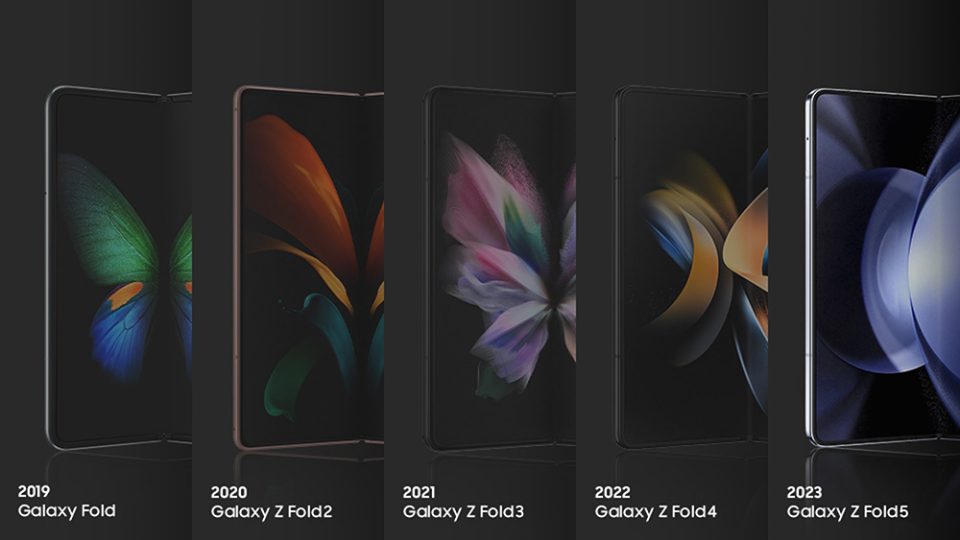
Fifteen years after abandoning its Anycall legacy, Samsung Galaxy arrives at a new inflection point: a long arc of bold reinvention that took the company from feature-phone dominance through the iPhone era and into a bet on foldables now dubbed “Foldable 2.0.” On 22 April 2026 Samsung will unveil a new Wide Fold form factor at Galaxy Unpacked in London, underscoring how the Galaxy brand has been built on risky pivots, vertical integration and a relentless focus on quality.
## Samsung Galaxy: the calculated break with Anycall
Samsung’s pivot began when the company chose to drop the Anycall brand and relaunch its handset strategy under the Galaxy name. In 2010 Samsung launched the first Galaxy S — initially co-branded as Anycall Galaxy S during the transition — and quickly erased Anycall once the new line found traction. That decision was not cosmetic: it signaled a complete rewrite of product strategy to confront the smartphone era triggered by Apple’s iPhone.
## Vertical integration as a competitive edge
A core weapon for Samsung Galaxy was its control over components and supply chains. Proprietary strengths such as Super AMOLED displays and in‑house application processors reduced costs and sped supply in ways competitors could not easily match. The strategy delivered immediate financial returns: the mobile division reported operating profits of 1.43 trillion won in Q1 2011 and 1.67 trillion won in Q2, soon becoming the company’s primary cash generator.
## Challenging the 3.5‑inch dogma and creating a premium category
Samsung also challenged prevailing assumptions about screen size. While Apple’s co‑founder asserted that 3.5 inches was the practical limit for single‑handed use, Samsung bet that phones would become media devices. The 2011 Galaxy Note paired a 5.3‑inch display with the S Pen and, despite early criticism, proved hugely popular. The Note series pushed average selling prices higher and helped the mobile division account for 24.94 trillion won of operating profit in 2013 — roughly two‑thirds of Samsung Electronics’ total that year.
## Crisis, accountability and a renewed focus on quality
Not all turns were smooth. The Galaxy Note 7 battery fires in 2016 caused a severe reputational and financial hit — losses estimated around 5 trillion won — and global safety interventions. Leadership opted for transparency: the company publicly disclosed causes and instituted an eight‑point battery safety check. That quality push contributed to the rebound seen with the Galaxy S8 and Note 8 in 2017, demonstrating the organization’s ability to translate failure into more rigorous processes.
## Foldable 2.0 and the next competitive front
At Galaxy Unpacked 2026 Samsung plans to extend that
