

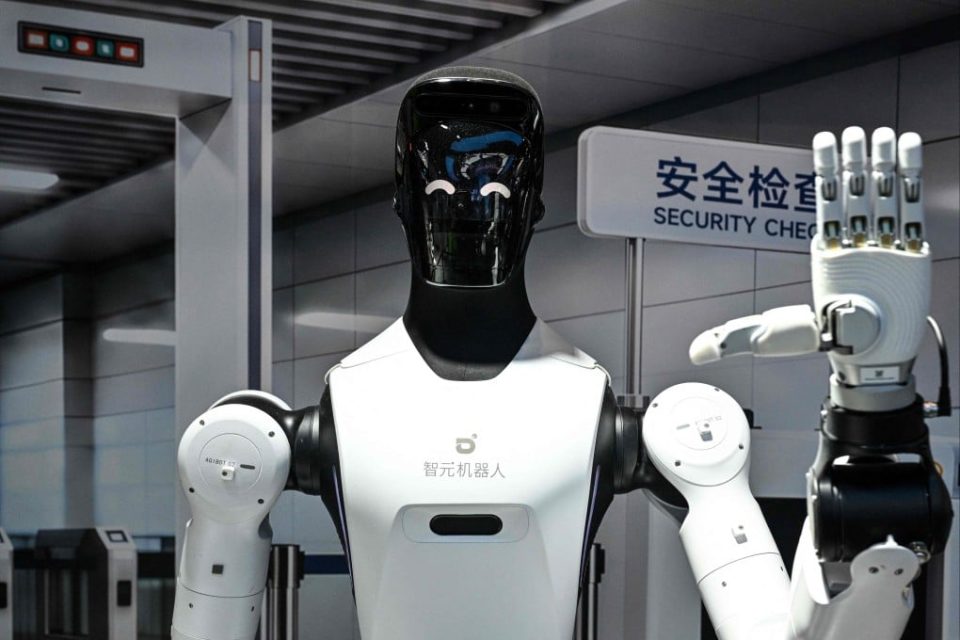
WAIC 2026 in Shanghai confirmed a new phase for AI: the shift from lab prototypes to production lines and industrial sites. The 2026 edition set new records — over 100,000 m² of exhibition space, more than 1,100 companies, 3,000+ demonstrations and 300+ global product launches — and highlighted a clear move toward large-scale operational deployments.
WAIC 2026 — numbers and highlights
The event drew over 1,400 domestic and international guests and presented a very broad slice of the AI ecosystem, from major cloud platforms to robot manufacturers. Organizers emphasized the influx of concrete innovations: humanoid robots, multi-application intelligent agents, and massive compute architectures. According to the Ministry of Industry and Information Technology, China led humanoid robot production, accounting for 90% of global shipments in 2025, with production expected to exceed 100,000 units in 2026.
From demos to robot industrialization
The show illustrated a rapid transition from “wow factor” demos to operational capability. Where WAIC 2024 showcased around twenty humanoid robots, the embodied-intelligence sector brought together more than 200 companies this year. Speakers attributed that maturation to the convergence of improved language models, falling component costs, and accumulated data from real-world use cases. Industrial players unveiled products aimed at mass production and demonstrated integration in manufacturing and service environments.
Compute power — architectures and dedicated centers
Compute — the foundation of these advances — was a major focus. Vendors showcased very large-scale architectures, including a configuration of 1,024 Ascend compute cards operating “as a single computer.” Telecom operators detailed infrastructure initiatives: private 5G deployments in factories, intelligent compute centers, and industrial service platforms. One major group reported connecting more than 14 million devices, accumulating over 100 terabytes of industrial data, training more than 75 industrial models and deploying over 150 intelligent agents.
China Telecom outlined an AIDC (AI data center) strategy centered on high density and flexibility, saying it operates more than 900 data centers with nearly 8 gigawatts of capacity. China Mobile quantified its AI footprint at over 107 EFLOPS, with supercompute clusters of more than 10,000 cards, 12 regional centers and 1,500 edge nodes.
(Note: the source text provided was truncated after the China Mobile figures.)
