

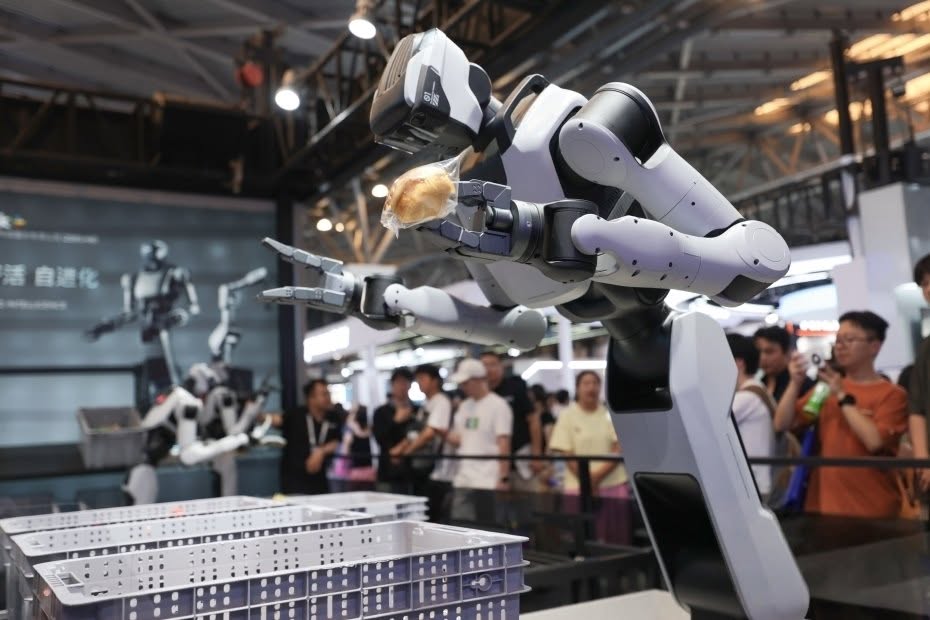
The World Artificial Intelligence Conference, held July 17–20 in Shanghai, provided a snapshot of the ongoing revolution: from embodied AI in robotics to debates over safety and governance, discussions made clear that the race in artificial intelligence now spans the entire industrial value chain—from research to commercialization.
World AI Conference: a focus on moving to real-world applications
On the show floor and in the auditoriums, the message was clear: AI is no longer just a set of algorithms; it is being integrated at scale into real-world contexts. Embodied AI—the pairing of advanced intelligence with robots capable of performing diverse tasks—exemplifies this shift toward practical use cases. Several demonstrations highlighted systems that have moved beyond prototype status into production, reducing costs and errors in sectors such as manufacturing and logistics.
Industry and services: efficiency gains and full innovation cycles
The applications showcased in Shanghai underscore a dual trend: immediate operational improvements and the emergence of complete innovation cycles, from R&D through to market deployment. In manufacturing, AI-powered vision, collaborative robotics, and smart warehouse systems are boosting precision and productivity.
