

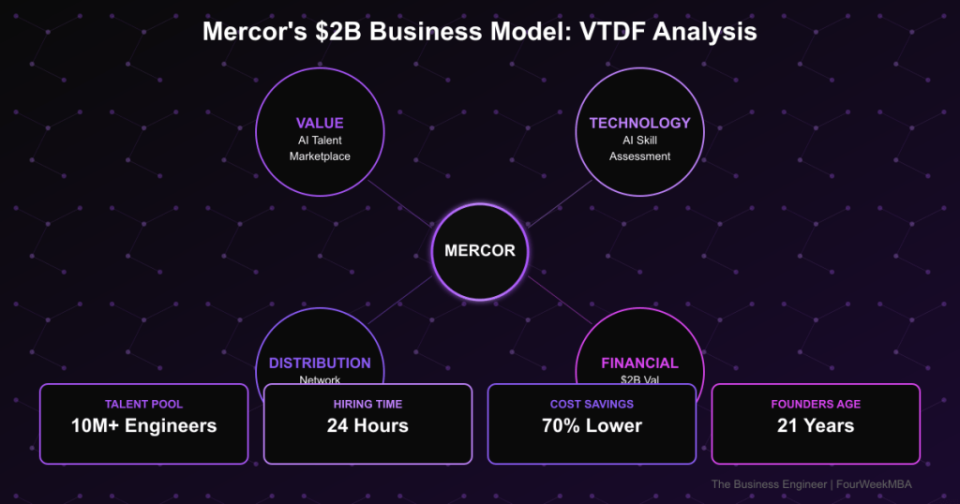
Mercor valuation is under scrutiny after the company’s widely quoted $20 billion AI valuation rests on a revenue figure that may not reflect what the company actually earns. At the same time, questions are being raised about China’s newest model, Qwen 3.8 Max, and the shutdown of Nigerian grocery startup GoLemon highlights a wider funding crunch for African startups.
Mercor valuation under scrutiny
Mercor has been reported as holding a $20 billion valuation, but the headline figure draws attention because the revenue number being cited does not necessarily represent money the company keeps. As one commentator put it, “If a company says it generated $2 billion, you’d probably assume that’s the money it gets to keep. But that’s not how Mercor works.” That gap between headline revenue and actual earnings is central to assessing whether the $20 billion valuation is justified. (By Damilare Odedina)
Qwen 3.8 Max: is the new model as strong as claimed?
Observers are questioning whether China’s newest AI model, Qwen 3.8 Max, performs as well as its promotional claims suggest. Public discussion has focused on comparing the model’s asserted capabilities with independent evaluation, but available reporting does not provide definitive answers about its real-world performance.
GoLemon shutdown exposes funding crunch in Africa
GoLemon has ceased operations despite having founders investors once trusted, more than 40,000 customers, and over ₦2 billion (US$1.5 million) in grocery sales. A few years ago, those metrics might have been enough to secure another funding round; recent market conditions and shifting investor expectations meant they were not. Observers frame GoLemon’s collapse as symptomatic of a broader funding crunch affecting African startups.
Additional note: this issue also highlights the funding dynamics behind GoLemon’s collapse and points readers to tech fellowships of interest this month.
