

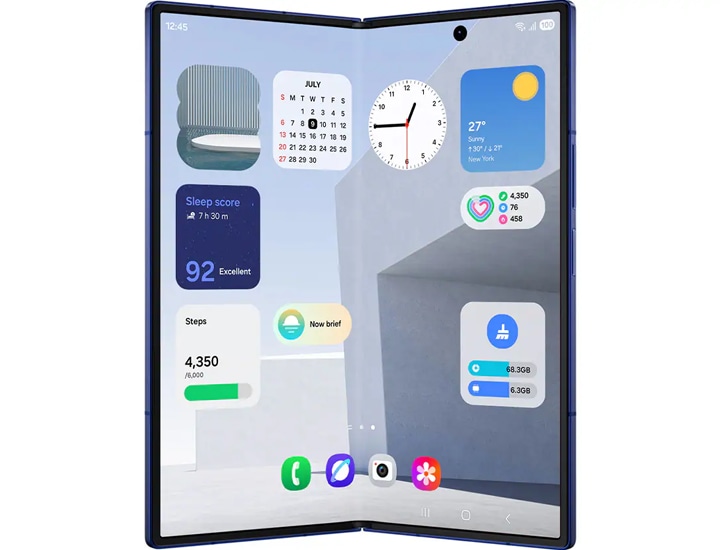
Samsung’s change to how it times major One UI and Android releases gives Galaxy S FE phones a measurable software advantage over the regular Galaxy S flagships. The Galaxy S26 FE will ship with One UI 9.0 and Android 17 out of the box, while the Galaxy S26, S26+ and S26 Ultra launched with One UI 8.5 based on Android 16, meaning the S26 FE begins life one Android version ahead of its pricier siblings.
Galaxy S FE’s update advantage explained
Because Samsung promises seven major Android OS upgrades for its flagship phones, the S26 FE should ultimately receive one newer Android version than the Galaxy S26, S26+ and S26 Ultra. In short, the cheaper FE model will have a small but notable software update advantage over the more expensive Galaxy S26 flagships.
This is not entirely new: the Galaxy S25 FE launched with One UI 8 and Android 16 while the Galaxy S25, S25+, S25 Edge and S25 Ultra shipped with One UI 7 and Android 15. The Galaxy S21 FE also arrived with a newer Android version than the Galaxy S21 series, but that was a one-off caused by the FE’s unusually late release.
How Samsung’s release cadence creates and shapes the gap
The current pattern stems from Samsung’s recent practice of debuting the latest major Android and One UI versions on its foldable flagships. Last year the Galaxy Z Fold 7 and Galaxy Z Flip 7 launched with One UI 8 and Android 16, and the Galaxy S25 FE followed a month later. The Galaxy S26 series then arrived with One UI 8.5, still based on Android 16. This year the Galaxy Z Fold 8 and Galaxy Z Flip 8 launched with One UI 9 and Android 17, and the Galaxy S26 FE will also ship with those versions; the Galaxy S27 series is set to debut with One UI 9.5 based on Android 17.
As long as Samsung continues releasing Galaxy S FE models after its new foldables, FE phones should consistently ship with a newer Android version than the regular Galaxy S flagships from the same generation.
The extra Android version does not necessarily translate into a straightforward feature advantage. Samsung’s approach now appears to use major One UI releases mainly to move devices to new Android versions more quickly, while reserving many larger feature changes for mid-cycle updates. Mid-cycle releases are also tied to newer Android QPR builds: One UI 8.5, for example, is based on Android 16 QPR2, and Samsung did not bring that mid-cycle build to some devices such as the Galaxy S22 series even though they received the Android 16-based One UI 8 update.
If Samsung continues this strategy, the Galaxy S26, S26+ and S26 Ultra could stop at One UI 15 while the Galaxy S26 FE would go on to receive One UI 15.5 and then One UI 16. Under the previous update system, the expectation would have been that the regular S26 models also receive One UI 15.5 and the S26 FE would advance to One UI 16.5.
