

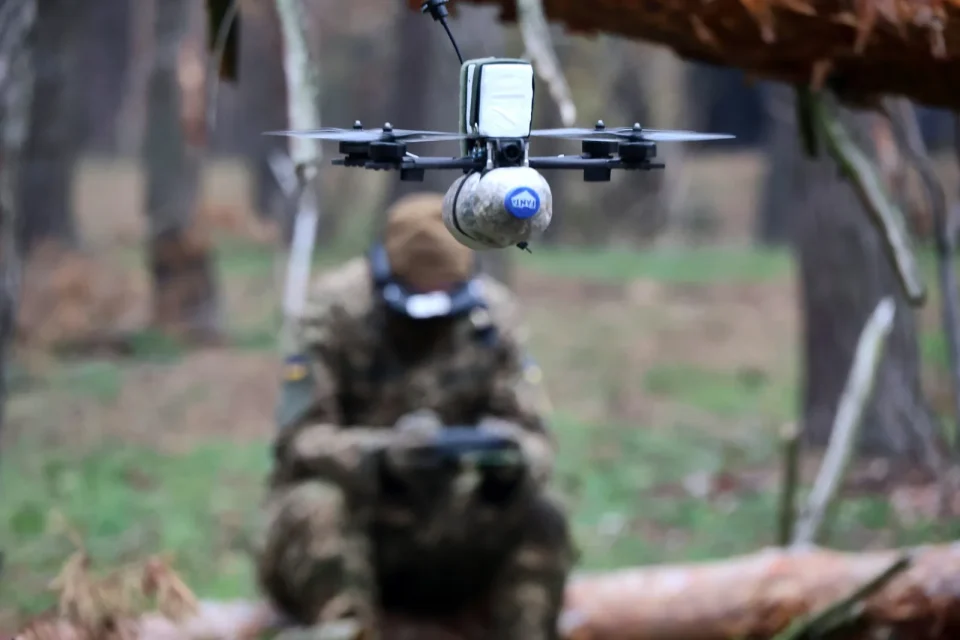
Occam Industries has raised a €3.8 million seed round led by Denmark’s North Ventures, with participation from Sparkmind and Grenadyr and continued support from original backers Antler, Tech Horizons, TYR.vc and Freedom Fund. The round follows a €3 million pre-seed announced earlier in 2026 and brings Occam’s total funding to €7 million.
The new seed was announced quietly at the end of September as the British‑Ukrainian defence software startup prepares for a larger Series A and forthcoming product news. The company says it will use the funding to accelerate deployment in Ukraine, boost R&D and expand its engineering team, while pursuing two business development tracks: more integrations with drone manufacturers and expansion into additional European and NATO‑aligned defence markets.
Occam Industries: hardware‑agnostic autonomy for drones
Occam develops hardware‑agnostic autonomy software for military drones intended for retrofit. Its software is designed to enable manufacturers and operators to complete missions autonomously without reliance on communications or manual control. Brave1 assessed and cleared the technology for testing in Ukraine.
Running on low‑cost compute, systems integrate through Occam Ludus. Ludus lets OEMs and military users combine autonomy modules and capabilities around mission requirements and define how they are used; there is no hardware stack or OEM disruption, Occam said. “That is what we built Occam to do: add effective and affordable autonomy to drones already being produced, without asking manufacturers to redesign the platform or build a new supply chain,” added Gui Wainwright, co‑founder and CEO of Occam Industries.
Occam says its technology is undergoing active deployment and testing with multiple Ukrainian OEMs and military brigades, and that frontline feedback is fed directly into the product. The company has moved from integration testing to frontline deployment while expanding its team and commercial traction: “Occam has moved exceptionally fast since its last round: from integration testing to frontline deployment, while more than tripling the team and contracting eight figures in revenue,” said Mikkel Strandkjær, investment manager at North Ventures. “What makes the company particularly compelling is its ability to scale in the field without being constrained by hardware manufacturing. The depth of its partnerships with Ukrainian OEMs and the military gives us real confidence in its path across Europe.”
Market context and strategy
Market research firm Markets and Markets estimates overall spend on military‑grade drones at $6.4 billion this year, rising at a compound annual growth rate of over 12% to about $12 billion by 2031. As production and the number of producers increase, the cost per drone is falling—creating opportunities for startups that supply lower‑cost autonomy and component solutions. Occam frames its product as meeting current demand for scalable, resilient autonomy: “The battlefield doesn’t need expensive autonomy that works in a demo,” said Wainwright. “It needs systems that can be deployed at scale, keep working under jamming and GPS denial, and reduce the number of highly skilled pilots required to complete the mission.”
The company says the latest funding will support accelerated deployment in Ukraine, continued R&D and growth of its engineering team as it pursues integrations and market expansion.
