

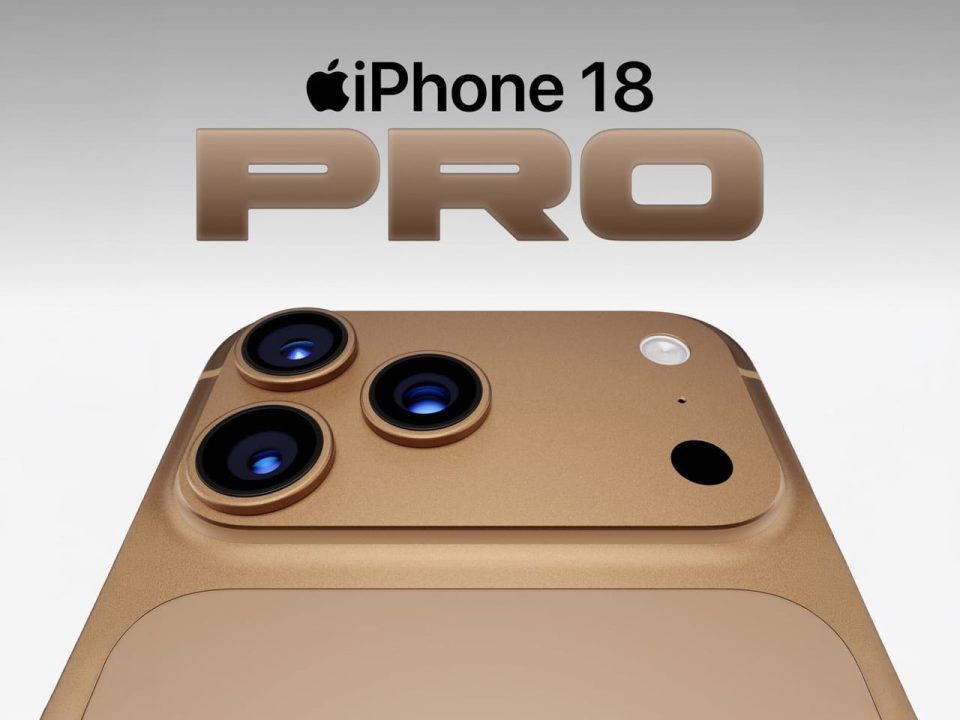
Apple’s M6 chip, revealed on August 25, offers the clearest indication yet of what to expect from the A20 family in the iPhone 18 lineup. Because Apple shares much of its silicon architecture between A-series and M-series chips, the M6’s features and measurements provide a practical preview of the reported A20 and A20 Pro capabilities.
A20 and Apple’s first 2nm iPhone chip
The M6 is Apple’s first chip built on TSMC’s 2nm (N2) process, and the A20 is almost certain to follow on the same node. Introducing N2 on a Mac mini rather than first on an iPhone is a departure from Apple’s usual cadence; the presence of a shipping N2 product now supports reports that the A20 and A20 Pro will move to N2. Recent reports place the A20 Pro at up to 18% faster and up to 30% more power efficient than the A19 Pro, which aligns broadly with the generational gains seen between the M5 and M6.
Dual Neural Engine and packaging
Where the iPhone’s Neural Engine has remained at 16 cores and roughly 35 trillion operations per second since the A17 Pro, the M6 introduces a Dual 16-core Neural Engine. Apple says system frameworks can address both engines simultaneously for up to 2x the peak compute of previous generations. That change corresponds with reported adoption of WMCM packaging, which integrates memory with the CPU, GPU, and Neural Engine to shorten data paths. It is possible die area and thermal constraints may limit a dual Neural Engine to the A20 Pro.
GPU AI gains now incremental
Apple attributed the M5’s over-4x peak GPU AI compute increase versus the M4 to the introduction of Neural Accelerators within each GPU core; the M6 is rated at nearly 30% over the M5. The A19 Pro recorded a comparable 4x improvement on the iPhone 17 Pro last September for the same architectural reason. Second-generation Neural Accelerators therefore appear to be a refinement rather than another dramatic step change, suggesting the A20 Pro is unlikely to match the A19 Pro’s headline 4x figure.
Graphics improvements likely to carry across
The M6 adds a 50% increase in geometry rates, an updated shader core architecture, revised Dynamic Caching, and hardware-accelerated ray tracing. These are architectural changes that have historically appeared across both A-series and M-series chips within the same generation, so comparable graphics work is likely to surface in the A20 family.
Memory bandwidth and on-device AI
The M6 provides up to 170 GB/s of memory bandwidth, which Apple describes as a 10% increase over the M5’s 153.6 GB/s. That modest rise suggests Apple is using a faster grade of LPDDR5X rather than moving to LPDDR6. Reports indicate Apple is sourcing high-speed LPDDR5X from Samsung for the iPhone 18 lineup, and the M6’s numbers are consistent with that sourcing. Given the A19 Pro is rated at 76.8 GB/s, a similar ~10% uplift would put the A20 Pro at roughly 85 GB/s. Any meaningful improvements in running large language models on device are therefore more likely to come from WMCM packaging shortening data paths than from a large jump in raw memory bandwidth.
Media engine: AV1 encode still absent
The M6 Media Engine supports hardware-accelerated H.264, HEVC, ProRes, and ProRes RAW, with AV1 decode but no AV1 encode, matching the M5. The omission of AV1 encode on a new process-node desktop chip makes its inclusion in the A20 Pro highly unlikely.
Taken together, the M6’s move to N2, the Dual 16-core Neural Engine, incremental GPU AI gains, architectural graphics upgrades, modest memory bandwidth increase, and lack of AV1 encode outline the most likely capabilities—and limits—of the A20 family expected in the iPhone 18 lineup.
