

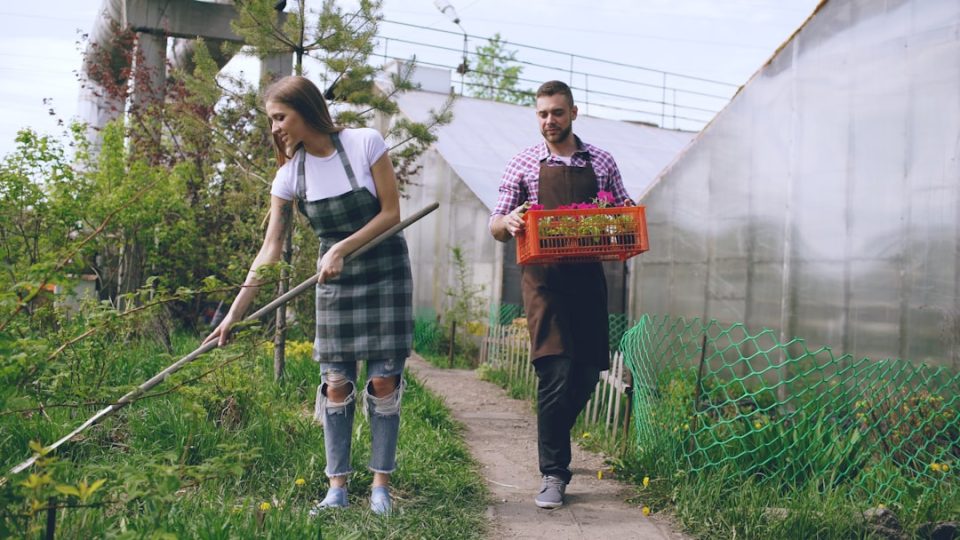
Zsámboki Biokert, a small market garden near Budapest, has become more than a production site: it is a living classroom and a hub for agroecology. Young trainees arrive to learn how to grow nutrient-dense food, while the team experiments with resilient local systems that push back against industrial food chains. The story unfolding there speaks to practical responses to ecological, social and economic strain.
## A food and farming community on the edge of the city
Zsámboki Biokert operates as a tight-knit food and farming community. Beyond labels like “bio‑intensive market garden,” the operation is a network: growers, eaters, logistics helpers and local advocates who together keep food moving from soil to table.
This proximity-based cooperation builds resilience. In a landscape dominated by economies of scale and exploitative supply chains, local relationships create stability and accountability for both growers and consumers.
## Rethinking routes to market
Small organic farms in Hungary face structural headwinds: policy neglect, economic volatility and shifting consumption habits. As supermarkets and global brands consolidate power, local producers must innovate.
Growers are experimenting with alternative channels — box subscriptions, CSA partnerships, collaborations with food-distribution start-ups and direct online sales. These routes require far more than horticultural skill: they demand marketing savvy, logistics coordination, IT know‑how and relentless paperwork. The challenge is not just growing food but making small-scale organic production economically viable.
## Hands-on training and intergenerational knowledge transfer
For a decade the garden has partnered with Cargonomia to host trainees who want to reconnect with practical work. The program functions like an “open university”: short, intensive, practice-focused internships that teach bed making, weeding, seasonal transitions and ecological thinking.
Hosting newcomers takes time and patience. Yet trainees often quickly become valuable contributors during critical seasonal moments. They bring fresh energy, reinforcing veteran morale and helping preserve generational craft. The exchange is mutual: youths gain practical skills and a clearer sense of how agroecology can shape a wellbeing-focused lifestyle.
## Agroecology as an escape route from conventional pressures
Many young people are searching for alternatives to the rat race — ways to reclaim meaning outside purely financial metrics. Practical agroecology offers a tangible escape: hands in the soil, seasonal rhythms, and community-based work that aligns daily practice with values of health and sustainability.
This growing interest in lifestyle alternatives suggests a slow cultural shift. Small farms become sites of experimentation where ideals are translated into everyday routines and potential career paths.
## From fieldwork to policy advocacy
The work does not stop at planting and harvest. Recent political changes in Hungary have sparked cautious optimism among farmers, researchers and advocates who hope to push for policies that support organic agriculture and agroecology.
Collective advocacy has become part of the farm’s mission. Balancing on‑the-ground management with campaigning is daunting, but it’s becoming an essential strategy to open space for smallholders and to influence national food and nutrition policy.
What keeps the team going is pragmatic optimism: a focus on the tangible benefits of community, nutrient-dense food, and hands-on education. In an unpredictable climate and economy, local agroecological efforts offer practical resilience and a pathway for young people to build meaningful, sustainable lives.
