

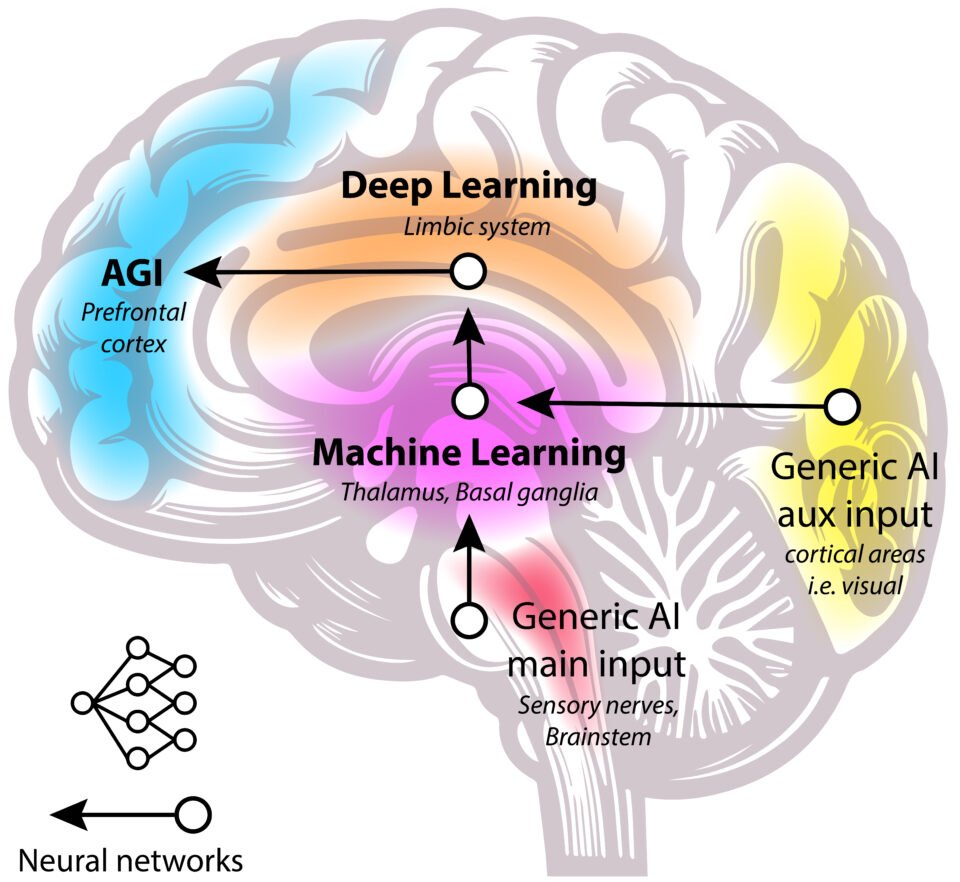
The Netherlands is at the forefront of a technological revolution in neuromorphic computing, a field inspired by the brain’s energy-efficient processing. While a human brain uses about 20 watts for complex tasks, supercomputers require much more energy. The Neuromorphic Computing Roadmap 2025 outlines how the Netherlands can leverage its strengths to achieve global leadership in this area. The country boasts a unique ecosystem with contributions from academia, industry, and government, covering the entire neuromorphic value chain. The roadmap emphasizes the strategic importance of neuromorphic computing for the National Technology Strategy, aligning with key technologies like AI, semiconductors, and quantum technologies.
The roadmap highlights the urgent need for energy-efficient AI solutions, as current systems face performance and energy consumption limits. Neuromorphic architectures offer significant efficiency gains by integrating memory and processing, potentially reducing AI tasks’ energy requirements from megawatts to watts. The Watt Matters in AI conference in Eindhoven will focus on these themes, showcasing the Netherlands’ ambition to compute as efficiently as the human brain.
To achieve this, the roadmap calls for a €30 million investment in shared facilities for benchmarking and prototyping. It advocates a coordinated national structure linking academia, startups, corporations, and ministries to drive innovation and international collaboration. The Netherlands aims to play a pivotal role in reducing AI’s energy footprint and enhancing digital autonomy, aligning with Europe’s goals for technological sovereignty and sustainability.
