

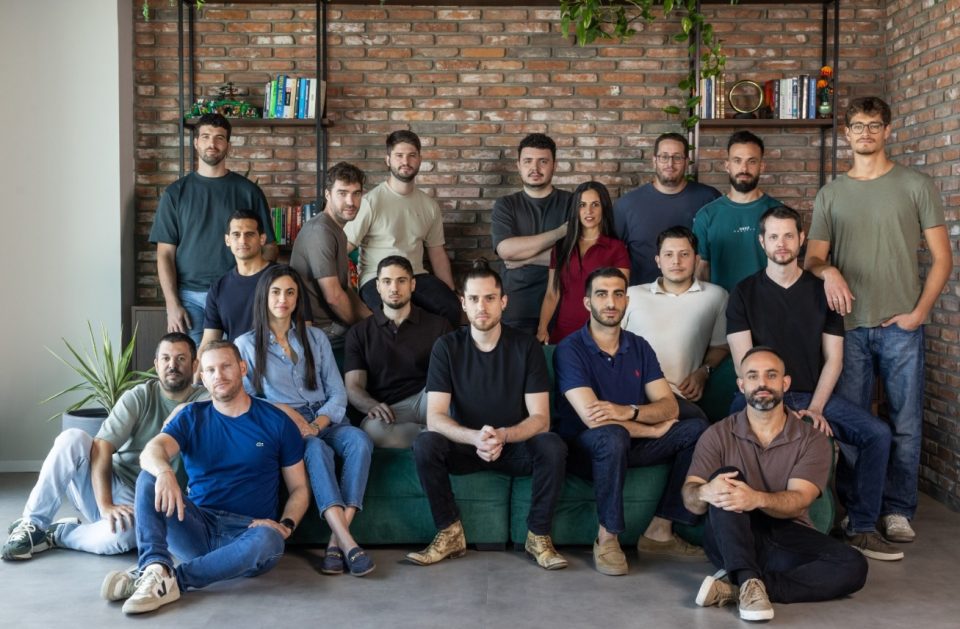
Corma has raised $60 million in seed funding led by Sequoia Capital, with participation from Khosla Ventures and Coatue, to build a foundation model specifically designed to defend enterprise systems against increasingly sophisticated AI-powered attacks.
Founded in 2025 and headquartered in Tel Aviv and San Francisco, Corma is developing artificial intelligence agents intended to perform defensive cybersecurity tasks across complex enterprise environments. The company says its technology is already deployed at Fortune 100 and Fortune 500 organizations in healthcare, financial services, energy, critical infrastructure and retail.
Corma is pursuing a strategy of developing a cybersecurity-specific foundation model rather than relying solely on general-purpose models such as OpenAI’s GPT, Anthropic’s Claude or Google’s Gemini. The company argues that advances in general-purpose AI have created an imbalance between offensive and defensive cybersecurity: modern models have become increasingly capable at software development and code reasoning, skills that can also be applied to vulnerability research, exploit development and multi-step cyberattacks.
Corma’s approach: a cybersecurity-specific foundation model
Defensive security presents a different technical problem, Corma says: enterprise teams must analyze large volumes of information from audit logs, network traffic, security events and numerous software tools, then connect signals across extended periods while making consistent decisions about potential threats. Corma is developing its model around those requirements with the goal of providing an AI-powered defensive workforce capable of operating across multiple security functions rather than automating a single task.
In simulations modeled on large enterprise environments with dozens of security tools, Corma tested leading AI systems in both offensive and defensive roles. According to the company’s research and testing methodology, AI attackers successfully executed their objectives 88% of the time, while AI defenders detected only 12% of the threats. Corma says those figures form a central part of its investment thesis: organizations may need security-specific AI architectures as offensive capabilities become faster and increasingly automated.
“The race to general intelligence in cybersecurity has already begun, and the attackers have a significant head start,” said Alon Pluda, co-founder and CEO of Corma. He said the company is developing an AI defensive workforce intended to give security organizations greater speed, scale and ability to respond to emerging attacks.
Corma’s foundation model powers a set of AI agents that the company says can be deployed across an organization’s security environment, continuously learn about the systems in which they operate and work across a range of defensive security functions. Since launching six weeks ago, Corma said customer deployments have reduced threat-response times by more than 94% and expanded security coverage across different functions by 15 times. The company also said its technology has identified multi-stage attack campaigns that otherwise would have gone undetected. Those performance figures are based on early deployments and have not been independently verified.
The early enterprise traction is notable for a company at the seed stage. Large organizations typically operate complicated cybersecurity environments built around multiple security products, internal systems and large volumes of operational data, creating a demanding testing ground for autonomous security technology.
“Corma has trained its model for the complexity of real-world attacks and is building the intelligence layer defense actually needs,” said Shaun Maguire, partner at Sequoia Capital. Maguire pointed to the increasing speed advantage that agentic AI can provide attackers as a driver of demand for more scalable defensive technology. Khosla Ventures founder Vinod Khosla also framed the opportunity beyond traditional enterprise security, citing potential consequences for critical infrastructure, healthcare and other essential systems as cyberattacks become more autonomous.
Corma has assembled a team spanning foundation-model training and offensive and defensive cybersecurity. Its employees include former Google and DeepMind AI researchers as well as cybersecurity specialists with experience at Israel’s Unit 8200 and established security companies.
With the $60 million seed round, Corma is positioning itself in an increasingly competitive cybersecurity AI market by focusing on the underlying model rather than another application built entirely on third-party AI systems. The company’s growth strategy now depends on translating early enterprise deployments into a scalable security platform capable of handling the complexity and reliability requirements of large organizations.
