

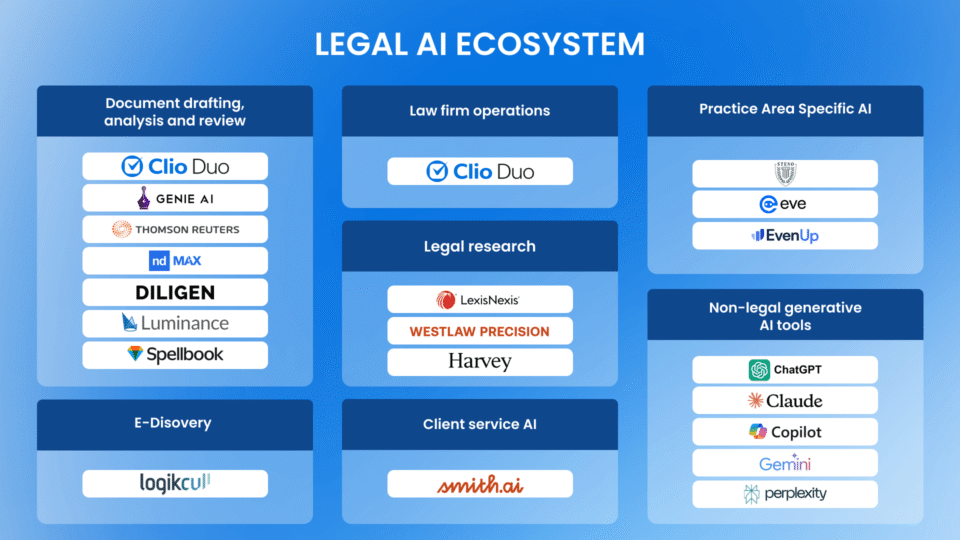
The recent announcement by Clio about its AI tools integrating both internal and external data has generated significant excitement in the legal tech community. This development promises a streamlined experience with one vendor handling all AI needs, potentially simplifying decision-making and enhancing creativity. However, there’s a need for caution. The excitement mirrors past overestimations of new technologies’ immediate impacts, as noted by Roy Amara’s famous observation.
Meanwhile, Thomson Reuters has announced a partnership with DeepJudge, aiming to provide a comprehensive AI solution that integrates internal firm knowledge with exclusive content. This follows similar efforts by other vendors, such as LexisNexis and Harvey, to bridge internal and external data applications.
Despite the buzz around Clio, it’s essential to consider whether existing solutions from other vendors might still meet firms’ needs. Additionally, there’s a risk in concentrating too much market power with one vendor, as it may lead to decreased service quality and higher prices over time. Competition remains crucial for innovation and customer choice.
Customers should be wary of untested claims and ensure that new tools deliver on their promises. As Debbie Foster from Affinity Consulting highlights, the real test comes when these tools face scrutiny in real-world applications. While Clio’s announcements are noteworthy, they should be approached with measured optimism and a critical eye.
