

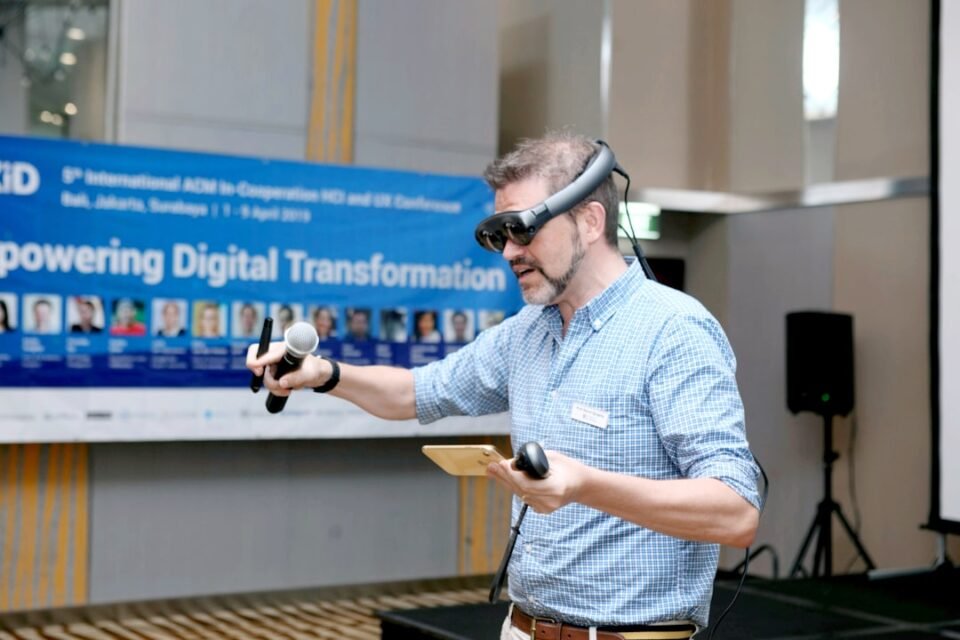
Enterprise AR glasses are revolutionizing industrial operations by overlaying digital schematics onto physical machinery, effectively reducing field service times by up to 40%. This technology enables remote specialists to view technicians’ perspectives in real-time, allowing for instant annotations and significantly cutting travel costs. AR training modules simulate numerous potential failure scenarios, speeding up onboarding by threefold compared to traditional manuals through immersive, hands-on repetition. These advancements enhance both efficiency and accuracy in maintenance workflows, equipping organizations with the tools necessary to maintain uptime and ensure operational safety.
The integration of AR glasses, remote assistance technology, and adaptive training enhances workforce skill development by providing real-time guided instructions and dynamically adjusting training modules based on individual performance. This approach allows companies to extend technical expertise across multiple sites, reduce human error, and shorten repair cycles. By adopting these technologies, enterprises can achieve measurable returns on investment, improve first-time fix rates, and maintain a competitive edge in increasingly complex industrial environments.
Enterprise AR glasses, like the RealWear HMT-1, are designed for rugged environments, offering features such as IP66-rated housings, 2-meter drop survivability, and 8-hour battery life to support full shifts. Remote assistance technology integrates 5G streaming and machine learning for hands-free guidance, while AR training platforms offer personalized skill development through adaptive scenarios. These tools ensure technicians can perform repairs efficiently and safely even in harsh conditions.
AR training modules embedded in AR glasses simulate hazardous scenarios, allowing technicians to practice complex operations without real-world risks. This includes scenarios like nuclear plant operations and oil rig repairs, where precise measurements and verifications can be conducted remotely. Gamified certifications further accelerate workforce upskilling, achieving higher completion rates than traditional methods.
Remote assistance technology significantly reduces mean time to repair by enabling collaborative holograms and real-time expert guidance from global locations. Integrating IoT sensor data with AR training modules allows for predictive maintenance, reducing downtime and improving repair efficiency. Scalable deployments of AR glasses can equip large field teams, generating substantial ROI through reduced downtime and faster first-time fixes.
In conclusion, enterprise AR glasses are transforming remote assistance technology and AR training, reducing operational costs while boosting first-time fix rates. These hybrid models ensure ongoing knowledge transfer across organizations, enhancing safety and enabling technicians to tackle complex tasks confidently. As industrial operations grow more complex, these technologies provide a durable, high-impact solution for optimizing efficiency, reducing errors, and scaling technical expertise across multiple locations.
