

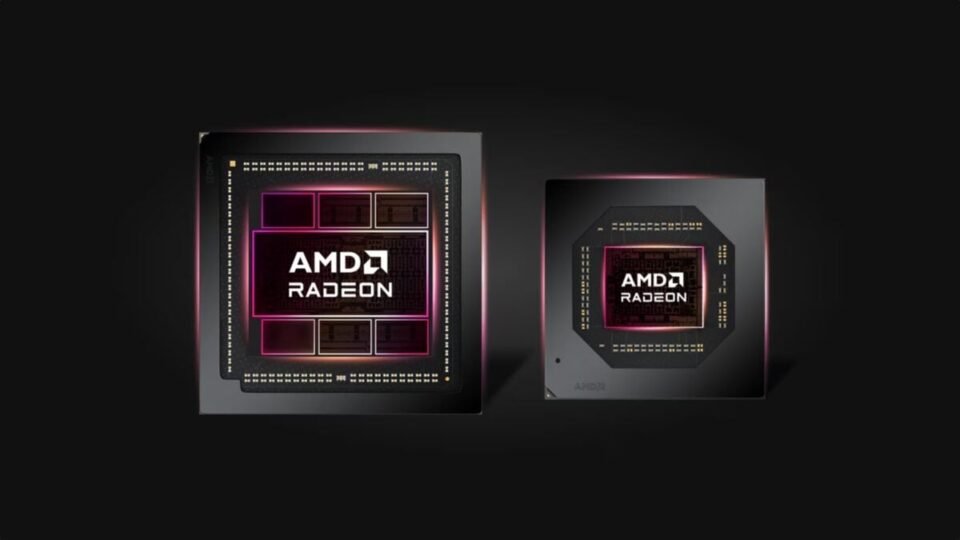
The Exynos 2600, Samsung’s flagship smartphone chipset for 2026, introduces groundbreaking advancements. It stands as the first smartphone chip built on a 2nm process node and notably lacks an integrated cellular modem. It also debuts a GPU based on AMD’s RDNA4 architecture, marking a significant evolution in mobile graphics technology.
The Xclipse 960 GPU within the Exynos 2600 employs AMD’s RDNA4-based MGFX4 architecture, enhancing performance and efficiency per compute unit. With eight workgroup processors (16 compute units) operating at 980MHz, it boasts performance twice as fast as the Exynos 2500’s GPU and offers a 50% boost in ray-tracing capabilities.
Samsung’s MGFX is a streamlined adaptation of AMD’s desktop-grade RDNA architecture, tailored for the compact and power-efficient requirements of smartphone chipsets. The Exynos 2200 utilized the RDNA2-based MGFX2, while the Exynos 2400 and 2500 featured the MGFX3.
Since 2019, Samsung and AMD have collaborated on mobile GPUs, with the Exynos 2200 as their initial product. While the Exynos 2400 and 2500 GPUs were co-developed, the Exynos 2600’s GPU was developed in-house by Samsung, leveraging AMD’s RDNA4 architecture. Looking ahead, the Exynos 2800 is expected to feature Samsung’s proprietary GPU architecture.
The real-world performance of the Exynos 2600, particularly in gaming and efficiency, remains to be seen. Its comparison with competing chips from Apple, MediaTek, and Qualcomm will be closely watched.
