

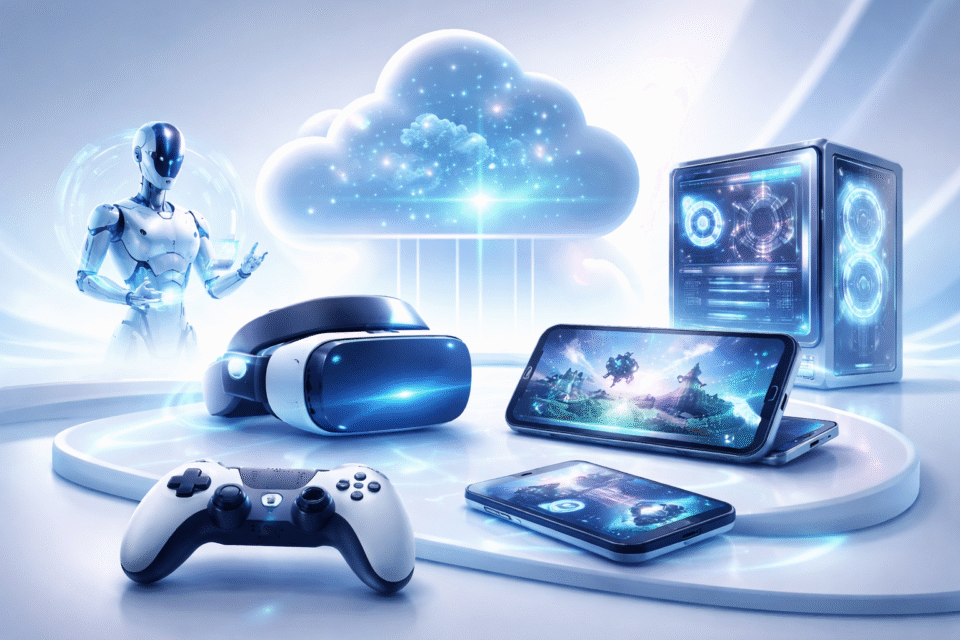
In 2025, the gaming industry is undergoing a significant transformation driven by artificial intelligence, cloud infrastructure, and platform innovation. These advancements are changing the way games are developed, distributed, and experienced, often without players even realizing it. The focus is shifting from mere visual enhancements to smarter game systems, dynamic worlds, and scalable platforms that offer seamless experiences across devices.
Artificial intelligence is now a cornerstone of game development, streamlining processes such as environment generation, NPC behavior, and automated testing. This allows developers to concentrate on creativity and player experience. Meanwhile, cloud gaming is overcoming previous barriers, providing high-quality gaming without the need for expensive hardware and expanding accessibility worldwide.
Cross-platform play has become the norm, with games designed for shared progression and synchronized updates across devices. The live-service model is evolving to focus on meaningful content updates and balanced monetization, ensuring player retention without fatigue. Additionally, Web3 concepts are being integrated more thoughtfully, enhancing player ownership and interoperability without disrupting gameplay.
Data analytics is increasingly informing game design, helping studios optimize experiences and extend player engagement. Gaming platforms are evolving into comprehensive ecosystems that blend games, social interaction, content creation, and commerce, fostering player loyalty and opening new revenue streams.
For the gaming industry, the emphasis is on optimizing systems and infrastructure for sustainable growth. For players, this means more accessible, intelligent, and responsive gaming experiences that evolve with their communities. As gaming technology becomes more complex, media platforms play a crucial role in explaining these trends and their significance. The future of gaming is being shaped quietly but powerfully, promising smarter and more sustainable progress.
