

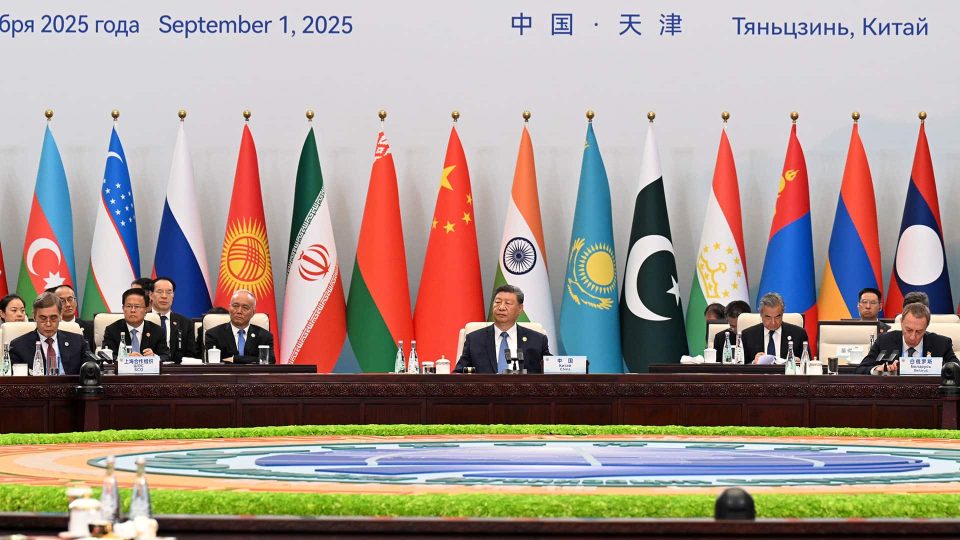
At the World AI Conference in Shanghai, President Xi Jinping urged China to lead the global race in artificial intelligence (AI), calling for stronger international cooperation, greater promotion of open source, and thoughtful sector governance.
New body with international reach
Xi used the platform to announce the creation of a new grouping of roughly 30 countries — reportedly including China, Brazil, Russia and Indonesia — described by state media as an intergovernmental organization based in Shanghai aimed at advancing global AI governance. He framed the initiative as a response to calls from the Global South to unite the international community around AI development and regulation, saying it “will become a major milestone in the history of AI development.”
Training, cooperation centers and tech transfers
To support that goal, Xi announced that China will offer 5,000 training slots in AI-related fields for developing countries and will establish cooperation centers focused on AI applications. He stressed the need to close the digital divide and promote sustainable development to avoid “creating new historical injustices” in the AI era.
Governance, safety and a push for open source
On governance, Xi warned that AI is evolving at “breakneck speed” and urged efforts to “better grasp the scope of supervision and governance, and more quickly refine measures to prevent loss of control.” He added that AI should not be “a solo of one country, but rather a symphony of global cooperation,” calling for encouragement of open source and open collaboration so AI can “empower all sectors.”
Geopolitical tensions and a veiled critique
Without naming the United States, Xi criticized the danger of “overly expanding the concept of national security in the AI field, or placing the security of one country above that of others.” His remarks echo Washington’s restrictions that limit certain Chinese companies’ access to advanced technologies.
A strategic move for China in AI
The Shanghai announcement blends diplomacy — building a network of countries around governance — with practical influence through training programs and application partnerships. By championing open source and cooperation, Xi is positioning China as a proponent of an alternative model for AI regulation and dissemination, while also signaling an intent to counterbalance foreign policies perceived as restrictive.
The path to shared governance
If the new grouping intends to shape global AI development, its impact will depend on members’ ability to convert declarations into concrete mechanisms for cooperation, standard-setting and skills sharing. For now, the initiative primarily signals China’s clear intent to exert greater influence in global AI governance.
