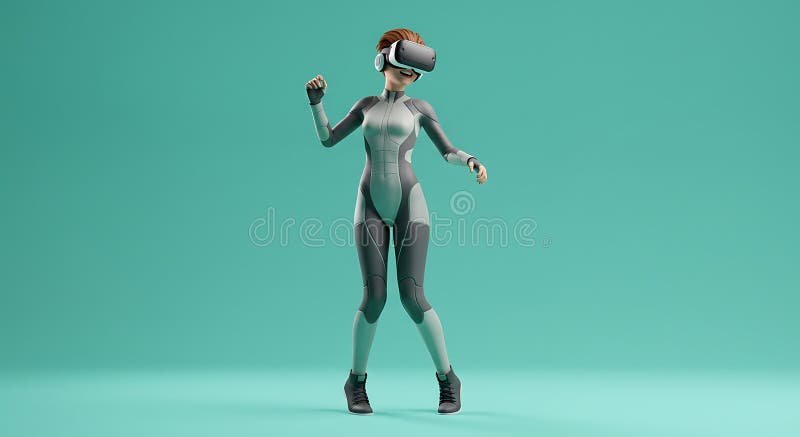
The Korea Advanced Institute of Science and Technology (KAIST) has unveiled a groundbreaking AI model, ‘MPMAvatar,’ capable of creating lifelike dance movements and realistic clothing details. This innovative technology, developed by Professor Taekyun Kim’s team, utilizes space- and physics-based generative AI to surpass the limitations of traditional 2D video generation. By reconstructing videos in 3D and enabling the AI to learn physics autonomously, the model produces natural video sequences that closely mimic reality. The AI can also handle previously unseen data and simulate various physical properties, making it versatile for diverse applications. Meanwhile, researchers at UNIST have improved the robustness and generalization of diffusion models, enhancing their performance in image generation. POSTECH is set to host its ‘SF DAY’ event with discussions on science fiction and its influence on future scientific advancements. In collaboration with the University of Chicago, POSTECH also held a symposium to explore topics like synthetic biology and biomedical engineering. DGIST showcased its strategic focuses in Physical AI, Human Digital Twin, and Quantum Sensing at the ‘FIX 2025’ exhibition, aiming to lead future innovation. Lastly, GIST has developed a method to convert sugarcane byproduct molasses into the valuable substance D-mannitol using enzymatic reactions, offering a sustainable approach to industrial waste upcycling.
Has KAIST Developed an Avatar That Dances Like a Butterfly?