

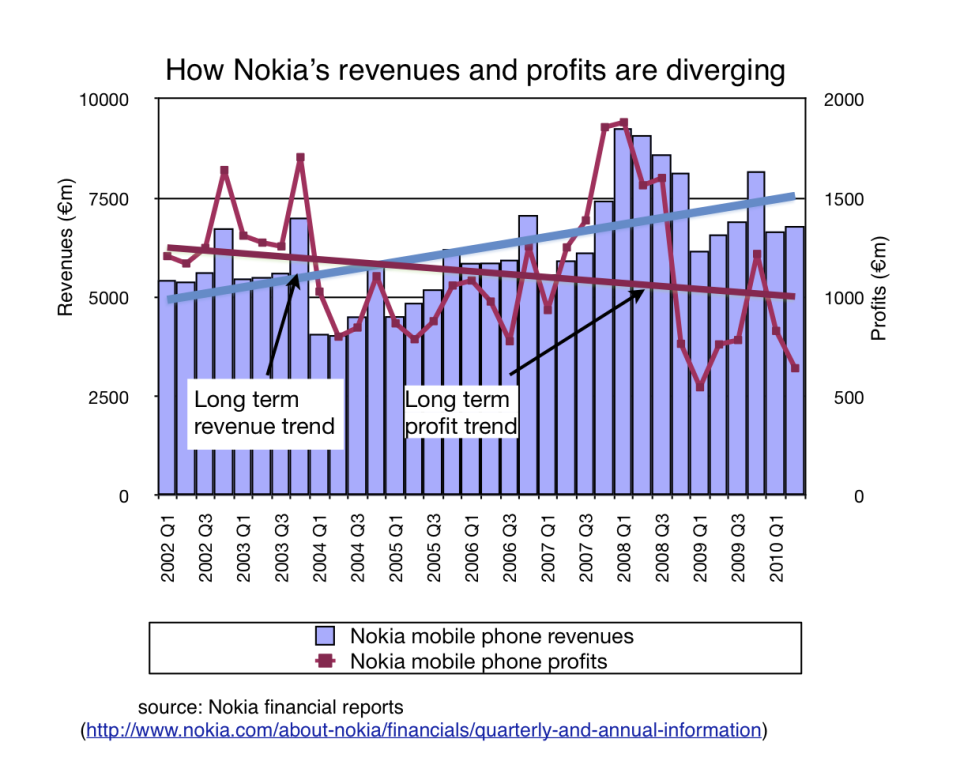
Nokia’s latest quarterly results paint a mixed picture: clear operational progress and margin improvement, but revenue softness and continued cash-flow pressure driven by uneven telecom demand.
Margin improvement despite tepid revenue
Nokia reported stronger comparable margins — a 46% gross margin and a 9% comparable operating margin — which helped offset a modest revenue shortfall versus expectations. Reported results were impacted by restructuring charges, yet management reiterated its full-year comparable operating income guidance of €2.1–€2.6 billion, signaling confidence in the company’s operational trajectory.
Growth drivers: networks, AI and licensing
Network Infrastructure stood out, led by Optical Networks and IP Networks, supported by enterprise and hyperscaler investment in AI and cloud infrastructure. Nokia’s AI and Cloud revenues more than doubled year-over-year, underscoring growing exposure to structural trends beyond traditional telecom spending. Meanwhile, the Technology Licensing division continues to provide recurring income through IP royalties, offering a stabilizing revenue stream.
Regional performance and peer comparison
Commercial momentum was strongest in the Americas and EMEA, while APAC displayed more heterogeneous demand. The same cloud and AI investment tailwinds helping Nokia are benefiting infrastructure peers such as Cisco and Ciena, which are likewise seeing strengthening cloud-infrastructure businesses.
Cash flow and watch points
Despite margin gains, Nokia posted negative operating cash flow and free cash flow for the quarter. The outflows were driven mainly by working-capital swings, restructuring payments and capital expenditures. Management says liquidity remains solid and expects cash flow to improve as working capital normalizes and efficiency initiatives take hold — but cash-generation remains a key metric to monitor.
Financial positioning and valuation
Quantitative ratings paint a mixed profile: Zacks ranks Nokia a #3 (Hold) with a composite VGM score of B (Value B, Growth C, Momentum A), reflecting improving execution but an ongoing transformation. Margin expansion, AI/cloud revenue growth and the stabilizing effect of licensing give Nokia levers to improve its financial trajectory. However, cash-generation trends and exposure to telecom investment cycles will be critical to assess the durability of this recovery.
