

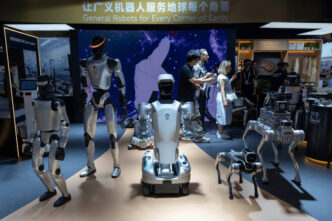
US bans foreign-made humanoid robots, citing national security and targeting China
The United States has announced a ban on foreign-made humanoid robots, a move framed as a national security measure aimed at China. The announcement represents an escalation in regulatory pressure specifically targeting human-form robotic systems imported from abroad.
Why humanoid robots raise national security concerns
US officials cite national security as the primary justification for the ban, with a stated focus on China. “Humanoid robots” refers to human-shaped machines that can interact physically and digitally with their environment. Policymakers argue such systems could pose risks related to data collection, cybersecurity, and the integrity of sensitive infrastructure. The announcement, however, provides no detailed explanation of the specific motives, evidence, or incidents that prompted the decision.
Potential consequences for industry and international cooperation
A ban on foreign humanoid robots affects manufacturers, importers, and end users across sectors from research to industrial services. Companies that rely on foreign components or platforms may need to revise supply chains or accelerate domestic development and production. Diplomatically and commercially, the measure risks heightening tensions with the country singled out and complicating international technology exchanges.
Outstanding questions to be clarified
The published text does not specify the scope of the ban (import, sale, deployment, research), enforcement mechanisms, possible exemptions, timeline, or which agencies will oversee implementation. These details will be critical to assessing the real-world impact on research, industry, and civilian use.
Takeaway
The announcement puts humanoid robots at the center of debates over national security and technological sovereignty. Without further implementation details, the practical consequences remain uncertain, but the decision signals a clear intent to control access to certain foreign robotic technologies.
