

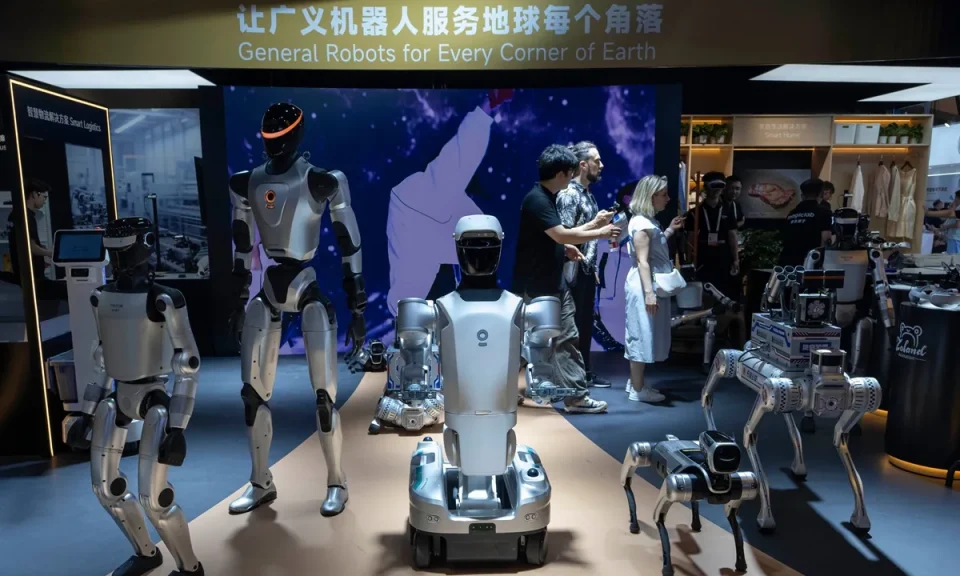
Chinese President Xi Jinping opened the 2026 World AI Conference and High-Level Meeting on Global AI Governance by calling to “always guide AI development with human wisdom and international consensus, so that AI can truly become a mighty force that increases the well‑being of humanity and advances human civilization.” China says it is translating that principle into a comprehensive push to deepen global AI governance, pairing top‑level design with detailed implementation while promoting openness, security and international cooperation.
AI governance: from principles to concrete action
China presented a multi‑pronged approach that it says aims to make AI’s benefits widely shared and its risks visible and controllable. Domestically, the country has released versions 1.0 and 2.0 of an AI Safety Governance Framework and issued national guidelines to build systems for technology monitoring, risk early warning and emergency response. The State Council’s Guidelines on Further Implementing the “AI Plus” Initiative and Implementation Guidelines on the Standardized Application and Innovative Development of AI Agents explicitly call for safety, controllability, orderliness and standardization in agent development.
At the international level, China has put forward a Global AI Governance Initiative and a Global AI Governance Action Plan that identify “safety and controllability” among core principles and call for risk‑based assessment, stronger laws and ethical guidance. China also launched an AI+ International Cooperation Initiative and an Action Plan for AI Cooperation and Development that sets out eight areas of action, including sharing open‑source ecosystems, jointly developing rules and standards, and strengthening cooperation on safety governance.
Scaling innovation and industrial adoption
China highlighted recent technological and industrial advances as the basis for its governance role. Kimi K3, a new‑generation Chinese large model released as open source, is reported to have 2.8 trillion parameters and to be the world’s largest open‑source model by parameter count. Chinese open‑source AI models have been downloaded more than 10 billion times globally, and open‑source communities such as AtomGit have more than 11 million registered users.
The country says six of the world’s top 10 applicants for generative AI patents are headquartered in China and that China is now the world’s largest holder of AI patents. Domestic indicators cited include an adoption rate of AI technology exceeding 30 percent among manufacturing enterprises above designated size, core intelligent economy industries growing to more than 1 trillion yuan (about $139 billion), and more than 600 million generative AI users.
China points to chip and computing‑power capabilities as strategic foundations. Zhangjiang Science City, where part of the World AI Conference was held, hosts hundreds of chip design, manufacturing, packaging and testing companies, accounting for about one‑fifth of the national industry scale. “Computing power is the cornerstone of AI development and governance. It concerns not only technological breakthroughs, but also strategic initiative. Only by basing development on independence and controllability, while ensuring inclusiveness and accessibility, can we continuously strengthen the foundation for AI development,” said Zhang Jianzhong, founder of Moore Threads.
Real‑world industrial and consumer applications cited include Midea’s “AI agent factories,” where SmartMore’s AI visual reasoning platform aligned inspection with production rhythm and enabled AI participation in production decision‑making; iFLYTEK Healthcare’s “AI Medical Assistant,” which the source says has improved efficiency and standardization of medical record writing; and the launch on August 12 of a so‑called Robot Phone by the smartphone brand Honor. Chinese large models are also reported to power services including the first official LLM used at the Milan Winter Olympics and a meteorological model called Fenghe for international weather services.
Assessing and managing risk
The Global Large Language Model Safety Evaluation Report (2026), produced by Dongbi Tech Data with the School of Digital Economy at Shanghai University of Finance and Economics, used 313 high‑risk science and technology questions to assess the safety prevention capabilities of 38 large language models from China and abroad. Zhu Xufeng, dean of the School of Public Policy and Management at Tsinghua University, said balancing development and security and advancing innovation alongside legal, ethical and integrity frameworks will guide large models and the AI industry toward positive, sustainable growth.
China also highlighted international governance contributions, saying its international action plan on AI ethics governance provides a principled and actionable framework and that its Global AI Governance Action Plan offers direction and pathways for cooperation.
Openness, cooperation and capacity building
China framed openness and open source as both a development model and a diplomatic approach. It reported that Chinese models and tools are used worldwide as “productivity tools” and benchmarks in global evaluations, and it has launched a global open‑source program alongside initiatives such as the AI+ International Cooperation Initiative.
At the 2026 conference, the World Artificial Intelligence Cooperation Organization (WAICO) was established with 38 founding members. China announced plans to provide developing countries with 5,000 opportunities in AI training and seminars over the next five years; to develop international AI application cooperation centers with ASEAN, the League of Arab States, the African Union, the Community of Latin American and Caribbean States, the Shanghai Cooperation Organisation and BRICS; and to promote the MAZU AI‑powered meteorological early‑warning solution in 30 countries.
Concrete international deployments cited include an intelligent rice‑fish farming model in Takeo Province, Cambodia, which local reporting says raised annual income per hectare from about $1,000 to more than $3,000; the YUKON system in Saraburi Province, Thailand, which a Chinese developer says increased mine efficiency by 16 percent and reduced electricity consumption by 20 percent; and MAZU’s early‑warning solution in Djibouti, where Mohamed Ismail Nour, director general of the Djibouti National Meteorological Agency, said Djibouti hopes to advance development by drawing on Chinese technologies.
China warned of a widening digital and intelligent divide if capacity is not spread more evenly: International Telecommunication Union data show about one‑third of the world’s population lacks internet access; the World Bank’s Digital Progress and Trends Report 2025 finds low‑ and middle‑income countries lag in AI systems and computing capacity; and the African Data Centres Association reports that Africa accounts for less than 1 percent of global data‑centre capacity. To address such gaps, China described a series of capacity‑building workshops and special cooperation programs targeted at countries of the Global South.
A recent international commentary contrasted two broad approaches to frontier models—one treating them as a high‑risk strategic asset to be tightly controlled and another treating them as technologies to be shared and commercialized. China’s stated response is to “put people first, ensure AI is used for good, and make it a powerful force for shared prosperity and common security,” and to promote multilateralism and the broadest possible common ground on global AI governance.
The materials used for this report were compiled and translated from a Chinese source and reflect the facts and figures presented there.
