

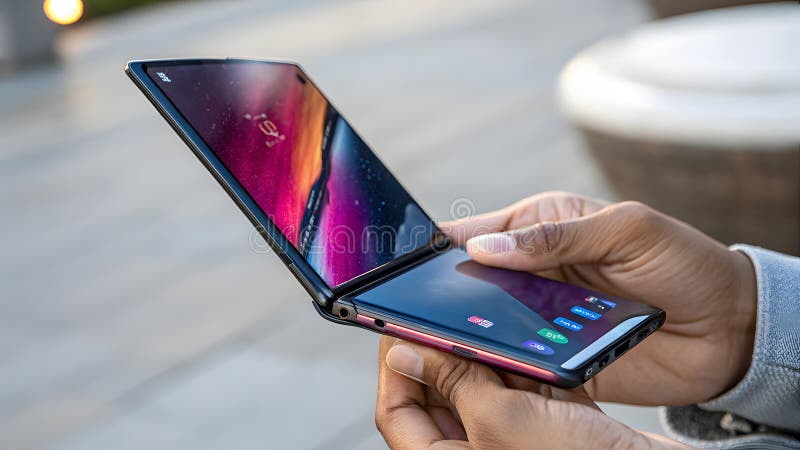
The Galaxy Z Fold 8 remains the more desirable foldable even though Google’s Pixel 11 Pro Fold out-specs it on paper. Google’s phone offers larger displays, more RAM and a more versatile camera setup, but Samsung’s decision to prioritise everyday usability has made the Fold 8 the more attractive product.
Galaxy Z Fold 8 practical advantages
On key physical measures the Galaxy Z Fold 8 is clearly advantaged: it weighs 201g versus the Pixel 11 Pro Fold’s 239g, and when unfolded it measures about 4.5mm thin compared with Google’s roughly 5mm device. Those differences translate into a noticeably lighter, slimmer carry experience.
Spec-for-spec comparisons favour Google in some areas. The Pixel 11 Pro Fold has a 6.5-inch cover display and an 8-inch inner display, 16GB of RAM, IP68 protection and a triple-camera array including a dedicated 5x telephoto lens. By contrast, the Galaxy Z Fold 8 has a 5.5-inch cover screen, a 7.6-inch inner screen, a 12GB base RAM configuration and a dual-camera system that is less versatile.
But Samsung has focused on attributes that are harder to quantify on spec sheets. The company appears to have invested engineering effort to make the Fold 8 feel more like a conventional premium phone while preserving the foldable form factor, prioritising lower weight and thinner dimensions over chasing every numeric lead.
Samsung also offers optionality: the Galaxy Z Fold 8 Ultra matches the Pixel 11 Pro Fold’s display sizes and adds a dedicated zoom lens. Both of Samsung’s new foldables run on Qualcomm’s Snapdragon 8 Elite Gen 5 for Galaxy chipset.
Desirability has commercial impact. Samsung has already increased production of the Galaxy Z Fold 8 by one million units, reflecting strong demand. The article notes that customers often buy foldable flagships because they want them, not solely because they are the most technically impressive options.
Samsung’s longer experience with foldables and the customer data that comes with it appear to have guided a strategy of balancing raw capability with day-to-day desirability. As long as its devices continue to outsell competitors by large margins, the company has little incentive to change that approach.
