

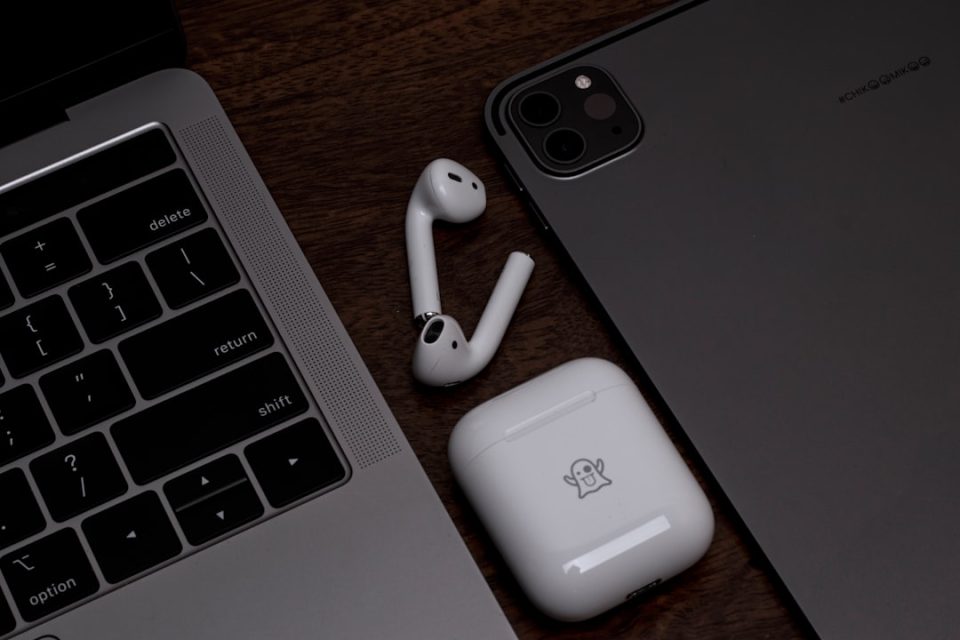
Apple’s September event delivered a string of new products — the company’s first foldable, the iPhone Duo, the iPhone 18 Pro and Pro Max, active noise cancellation on the AirPods 5, and Siri Recap on the Watch Series 12 and Watch Ultra 4 — but AirPods with cameras were notably absent. According to Mark Gurman, the camera-equipped AirPods Pro are now delayed until 2027, and I’m personally glad they were not announced; I hope they never arrive.
AirPods with cameras: privacy and practical limits
The idea of cameras embedded in earbuds raises immediate privacy concerns. LED indicators on glasses or earbuds do little to reassure people when someone is recording, and some Meta smart glasses users have demonstrated that wearers can hide their recording intentions. Recording in public in the US is generally legal, but it can still feel invasive, and ubiquitous earbuds could allow someone to enter sensitive situations unnoticed. Rumors claim the cameras would be low-resolution and ‘aren’t designed’ to capture conventional images or video but to feed a Visual Intelligence system for Siri. Even so, a device that continuously gathers visual information about its surroundings—people included—represents a persistent intrusion that many may find unacceptable.
Apple’s Audio Intelligence and the data promises
At the same event, Apple introduced Audio Intelligence on the Apple Watch, which appears to foreshadow the Visual Intelligence expected on a rumored AirPods Pro 4. In its support documentation, Apple states that audio is not stored and there is no way to access recordings; it says data used to generate Siri Recap summaries is not accessible by Apple. Examples of stored data, such as a Siri Recap or text saved with Live Rewind, are said to be end-to-end encrypted, and people are not identified in Siri Recap summaries. Those protections could extend to visual data if Apple applies the same approach, but the features are not live yet and their effectiveness remains to be seen.
Potential accessibility benefits
There are clear, tangible benefits if earbuds ever include cameras and on-device visual processing. They could boost situational awareness for people with visual impairments, assist hard-of-hearing users with lip reading, or identify objects and text to aid navigation and information tasks. Cameras could also help focus microphone arrays on the person a user is speaking with to improve intelligibility.
Practical obstacles and reasons for delay
Beyond privacy, practical factors limit how useful such cameras would be. A camera can only gather information when it has a line of sight: long or thick hair, hooded clothing, or elaborate jewelry could block any useful view, reducing the feature to ordinary earbuds. It is possible the pushback and design challenges explain the move to 2027, or that Apple is distancing itself from the current public climate around wearables with cameras driven by other companies such as Meta and Flock.
When privacy concerns and the risk of misuse are set against the potential accessibility gains, the trade-offs demand a high level of trust—trust that many users and observers may be unwilling to place in companies or other parties. For now, the delay and Apple’s emphasis on Audio Intelligence suggest the company is intensifying its use of sensors to analyze the world around us, but whether camera-equipped AirPods will become acceptable remains an open and deeply personal question.
