

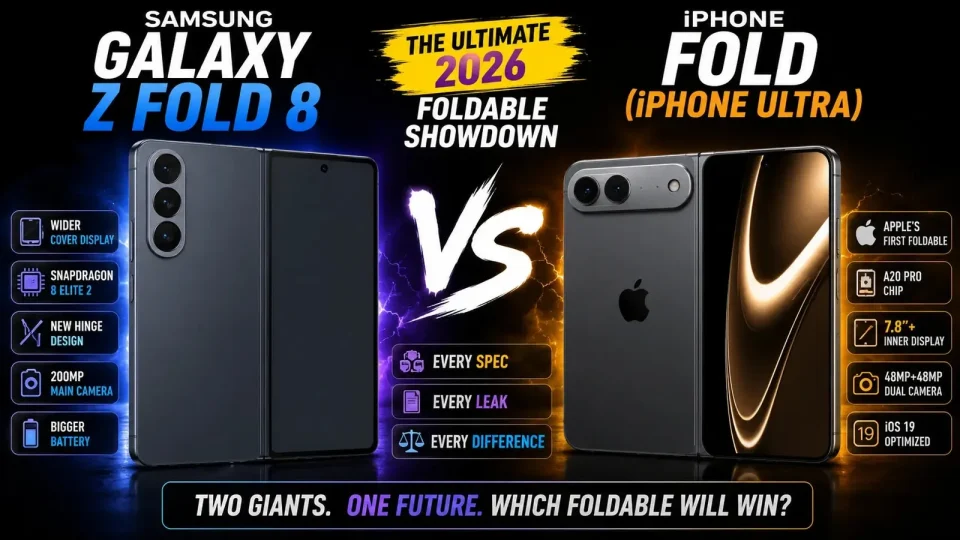
As of this writing, the Galaxy Z Fold 8 offers better app support than the iPhone Duo: Android apps adapt to the Fold 8’s screens more effectively than iOS apps do on the Duo, across both the cover and main foldable displays.
Galaxy Z Fold 8: Android’s responsive UI scaling suits foldables
Android OS uses a responsive, adaptive design that lets UIs and layouts stretch and reflow more freely, provided an app was developed with that flexibility in mind. By contrast, iOS resizes apps and interfaces according to preset resolutions and aspect ratios, effectively relying on a list of supported resolutions and aspect ratios that apps can target. This core difference gives Android an advantage in the foldable niche and helps explain why more apps currently look better optimized on the Fold 8.
iPhone Duo’s unusual cover and proprietary UI design
The iPhone Duo departs from typical cover-screen proportions: rather than a true 16:10 cover screen, the Duo’s cover is closer to 14.5:10, appearing shorter and wider than the Fold 8. Apple also uses the Duo’s extra screen width for a new iOS control surface on the right side of the displays, a taskbar-like area that app developers must account for. iOS apps that have not been optimized for the Duo can ignore that taskbar area and leave a blank strip, effectively failing to run full-screen on both the cover and foldable panels. The foldable panel likewise lacks a true iPad aspect ratio and therefore cannot natively accommodate every iPad app in full-screen.
Apple’s own apps support the Duo’s unusual design, but many third-party iOS apps do not. This situation may change in the coming weeks and months, especially given how quickly iOS app developers can release updates. For now, however, Samsung and Android are leading the way: the Galaxy Z Fold 8 currently provides a better out-of-the-box app experience on both its cover and foldable screens.
