

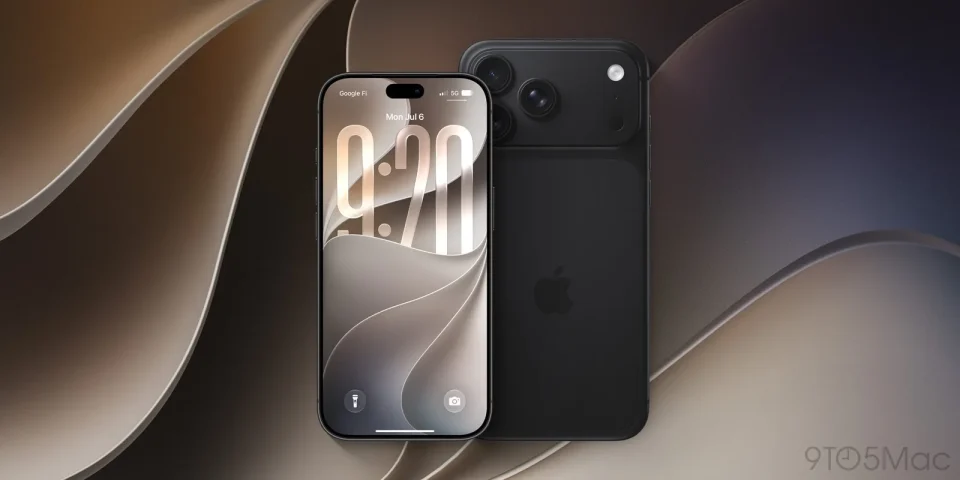
The first reviews of the iPhone 18 Pro and iPhone 18 Pro Max were published today by selected tech websites and YouTube channels, ahead of the devices arriving to customers and launching in stores on Friday, September 18. Reviewers call the phones excellent overall but highlight mostly incremental, year‑over‑year improvements.
iPhone 18 Pro performance and thermals
The iPhone 18 Pro models ship with the A20 Pro chip, described by Apple as the first 2nm chip in a smartphone and said to deliver up to 20% faster CPU performance and up to 40% faster graphics performance compared with the A19 Pro. Raymond Wong ran Geekbench 7 on the iPhone 18 Pro and the iPhone 17 Pro, both on iOS 27: the iPhone 18 Pro scored 4,027 single‑core and 11,540 multi‑core, while the iPhone 17 Pro scored 3,258 single‑core and 9,167 multi‑core—figures that Wong reports as a 24% single‑core and 26% multi‑core boost.
Apple also enlarged the vapor chamber cooling system in the iPhone 18 Pro models to be three times larger than in the iPhone 17 Pro models for improved heat dissipation. According to reviewers, the phones rarely got hot during normal use; Wong wrote that even shooting 4K/60 video during a heat wave did not cause overheating, and that the larger vapor chamber helps the A20 Pro sustain peak performance for longer.
Battery and charging
Both iPhone 18 Pro models have longer battery life than the previous generation, with the iPhone 18 Pro Max seeing the largest gain. By Apple’s offline video playback metric, the iPhone 18 Pro Max offers up to 15% longer battery life compared with the iPhone 17 Pro Max. Fast charging to 50% now takes 15 minutes, down from 20 minutes.
In a published battery life test, the iPhone 18 Pro Max recorded 18 hours and 27 minutes, compared with 17 hours and 54 minutes for the iPhone 17 Pro Max. The same test put the iPhone 18 Pro at 16 hours and 17 minutes versus 15 hours and 21 minutes for the iPhone 17 Pro. For context, the OnePlus 15 in that test ran 25 hours and 13 minutes, and another flagship listed ran 16 hours and 40 minutes.
Cameras, variable aperture and Pro controls
Both iPhone 18 Pro models use a 48‑megapixel Fusion main camera with a new variable aperture, offering ƒ/1.48, ƒ/1.8, ƒ/2.8 and ƒ/4.0 settings to control light and depth of field. Apple says the change improves low‑light performance and yields crisper details in the background of group photos.
Jaron Schneider evaluated the variable aperture and noted that sharpness suffers at the widest setting. He reported that while the center sharpness at night is comparable to last year at wide‑open settings, edges degraded noticeably when shooting wide open. Schneider wrote that image quality improves at ƒ/1.8 and peaks at ƒ/2.8, with ƒ/4 showing a small dip from diffraction. In his assessment, sharpness from sharpest to softest ranks: ƒ/2.8, ƒ/1.8, ƒ/4, and ƒ/1.48.
The Camera app on the iPhone 18 Pro and 18 Pro Max adds new “Pro controls” that let users manually adjust shutter speed, white balance and aperture, and optionally display a histogram. These Pro controls are exclusive to the iPhone 18 Pro models. Patrick Holland said he appreciated the controls but criticized their placement: they live at the bottom of the camera controls drawer, making one‑handed access awkward, and he wished for more customization and assignment options such as linking controls to the side Camera Control button.
Dynamic Island and Live Activities
The Dynamic Island on the iPhone 18 Pro models is slightly smaller and can display up to three Live Activities at once, up from two. Chance Miller noted that the reduced size lets a second Live Activity on the right show more information when two activities run simultaneously. The flight‑tracking app Flighty highlighted the refined Dynamic Island in its iOS 27 update, adding a flight progress arc, support for new sizes, new app icons, and an “Ask Flighty” Siri AI feature.
Connectivity, design and finishes
For cellular connectivity, the iPhone 18 Pro is equipped worldwide with Apple’s second‑generation C2 modem. The iPhone 18 Pro Max uses the C2 modem in every country except the U.S., where it reportedly still ships with a Qualcomm modem. Apple says the C2 delivers “meaningfully faster uploads” and consumes 15% less energy than its previous C1X modem; in the U.S., the C2 is also Apple’s first modem to support mmWave 5G. Reviewers have not yet published scientific modem tests, but most found 5G performance adequate anecdotally.
Color options for the iPhone 18 Pro line are classic Silver, the return of Black, plus new Burgundy and Glacier finishes.
Who should upgrade?
Reviewers generally conclude there is no urgent reason to upgrade to the iPhone 18 Pro if you already own an iPhone 17 Pro or possibly an iPhone 16 Pro. For users of an iPhone 14 Pro or older, upgrading to the iPhone 18 Pro is considered worthwhile to catch up on several years of improvements and to access Apple’s new‑and‑improved Siri, which Apple has made available on iPhone 15 Pro and newer models. The broader sentiment repeated across reviews is that the iPhone 18 Pro is an excellent phone whose year‑over‑year changes feel iterative—strong but not revolutionary.
Allison Johnson described the iPhone 18 Pro as “excellent and utterly iterative,” and Cherlynn Low characterized it as feeling like an “S”‑year device: not unworthy, but not exciting, while still offering meaningful improvements for users on older models, especially those interested in manual photography features such as the new variable aperture.
