

A California-based clean-tech startup, Fluxnium, emerged from stealth after raising a $7 million seed round led by Congruent Ventures, with participation from Active Impact Investments and Constellation Energy (CEG), to commercialize polymer fibers that capture uranium dissolved in seawater and convert it into yellowcake for nuclear fuel.
The company, led by serial entrepreneur Jeff Green, licensed its core chemistry from U.S. Department of Energy national laboratories, where seawater uranium extraction was first demonstrated decades ago. Early demonstrations produced uranium at more than $200 per pound—roughly double what Western suppliers charge today—and Fluxnium says it has rethought fiber manufacturing and deployment to dramatically increase surface area and capture more uranium per deployment.
Fluxnium estimates more than 4 billion metric tons of uranium are dissolved in the world’s oceans, “like a thousand times more than all identified hard rock mines combined,” Green said, a quantity the company says would satisfy global demand for roughly 50,000 years at current consumption rates.
Yellowcake prices have risen 75% over the past five years, according to the U.S. Energy Information Administration, and Western nations rely heavily on imports from Kazakhstan, Uzbekistan, Russia, Namibia, Niger, and China. Green warned of geopolitical risk in that supply mix and said growing interest in nuclear power—boosted by technology companies seeking reliable, carbon-free electricity for AI data centers—could create structural uranium shortages if demand materializes as projected.
How uranium from seawater extraction works
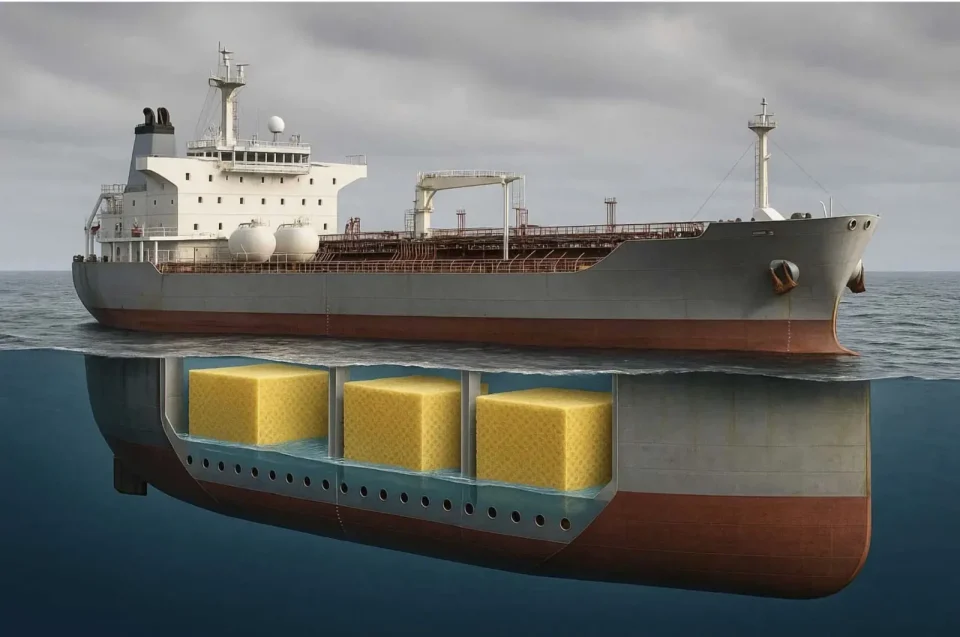
Fluxnium’s polymer fibers are specially manufactured, braided into long lines, hauled offshore and suspended from buoys in a configuration similar to seaweed farms. The fibers remain submerged for 30 to 60 days, during which they attract dissolved uranium from surrounding water. Retrieved lines are processed to elute the captured uranium, which is then purified into yellowcake.
The company says the process generates no toxic tailings, unlike conventional mining, and that each fiber line can be reused multiple times. “Then we sell that just as any other mine into the supply chain,” Green said.
Commercial challenges and next steps
Fluxnium identifies manufacturing the specialized fibers and offshore deployment as the two largest expense categories and is focused on driving costs down across the supply chain. “None of the components of this process are anything novel. It’s all been done in different ways,” Green said. “Our job is to drive cost out of the supply chain, keep working through all the stages of the process to make it as low cost as possible.”
