

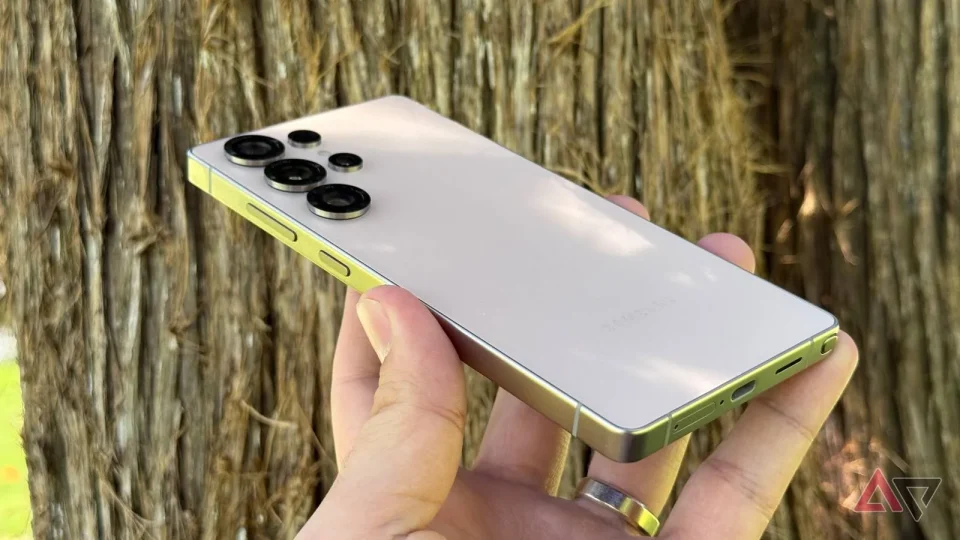
I pulled my Galaxy S25 Edge out of a drawer today and, holding it as I write, was reminded how good it feels: despite a 6.7-inch display it doesn’t really feel like a large phone in the hand. At 5.8mm thick and 163g, the S25 Edge remains an impressive piece of hardware, offering a lot of screen without the weight I’ve come to expect from big Galaxy phones.
That memory comes with caveats. The S25 Edge’s 3,900 mAh battery was one of our biggest complaints, and the model lacked a dedicated telephoto camera. I wouldn’t want Samsung to bring the Edge back with the same compromises, but I do want the company to try again at making a large phone that feels this light and slim.
Samsung came close to giving the Edge another shot. As previously reported, Samsung was developing a Galaxy S26 Edge and even considered replacing the Plus model with it. The thin phone seen in early leaks was the Edge, not the Galaxy S26+ that eventually reached shelves. Samsung ultimately stuck with the regular Plus model and the Edge never launched.
What stood out in those renders was a wide camera bar, a design element that also appears in recently leaked Galaxy S27 Pro and Ultra designs. While Samsung appears to be persisting with that camera-bar aesthetic, there’s little to suggest it plans to revive the Edge. I had hoped the Galaxy S27 series would mark its return; holding the S25 Edge again has only made me want it more.
Galaxy S25 Edge design and handling
The S25 Edge’s combination of a 6.7-inch screen with a 5.8mm thickness and 163g weight is notable. After using many large smartphones since its release, I’ve come to appreciate having that much display without the typical heft of a big Galaxy device. The lack of size in the hand is the core appeal I would want Samsung to preserve.
Battery trade-offs and silicon-carbon potential
One of the Edge’s chief weaknesses was its 3,900 mAh battery. Samsung already uses silicon-carbon batteries in the Galaxy Z Fold 8 and Galaxy Z Fold 8 Ultra, which have 4,800 mAh and 5,000 mAh batteries respectively. I don’t expect Samsung to reach those capacities in a phone that has half the internal space and is only 5.8mm thick, but the higher energy density of silicon-carbon cells could help address the Edge’s battery shortcoming without sacrificing its slim profile.
I don’t need a return of the Edge to be any thinner than the original; I simply want it to last longer between charges. Some of my colleagues share that view.
Where the Edge could fit in Samsung’s lineup
I’ve never found the Plus model particularly exciting, and I don’t get the impression that it’s one of Samsung’s biggest sellers either. Given that, there’s a clear rationale for revisiting the original plan: bring back the Edge and give it the Plus model’s spot in the lineup, but without repeating the S25 Edge’s compromises.
