

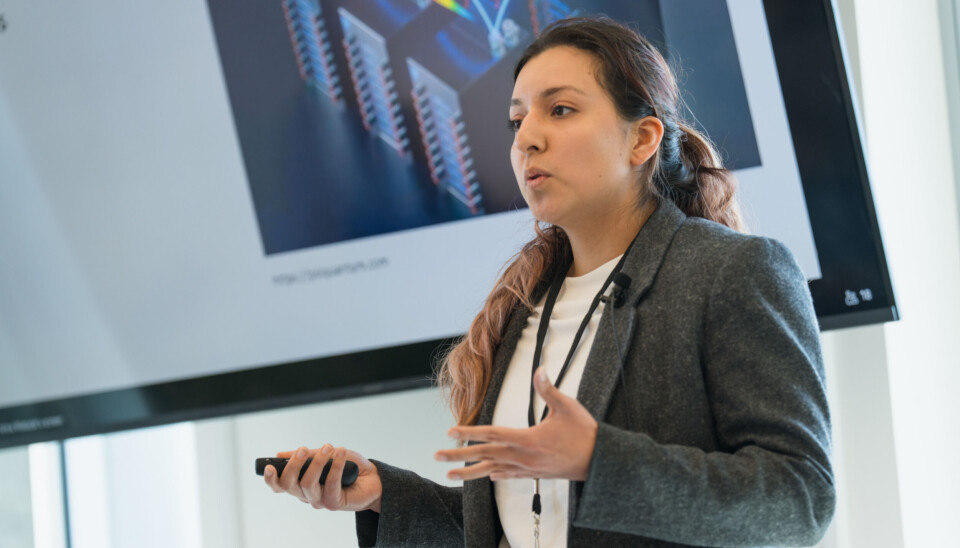
Photon Queue has closed an oversubscribed $4 million seed round led by Playground Global to accelerate development and deployment of its ambient‑temperature quantum memory. The company, spun out of the University of Illinois Urbana‑Champaign in 2024, says it has already delivered its first commercial systems to Sandia National Laboratories and the University of Maryland.
Ambient‑temperature quantum memory
Photon Queue’s technology stores and synchronizes single photons using free‑space optical delay loops combined with high‑reflectivity mirrors and proprietary optical switches. The company says this approach eliminates the need for cryogenics, vacuum enclosures and complex transduction stages while delivering high efficiency and significant bandwidth. Devices are designed to be compatible with multiple quantum architectures, including photonics, trapped ions and neutral atoms.
Deployments and validation by national labs
Photon Queue highlights contracts and deliveries to leading research customers: Sandia National Laboratories and the University of Maryland. According to the company, these early installations validate demand for photonic synchronization infrastructure in distributed quantum systems. The startup is also a graduate of several support programs, including the Duality Quantum Accelerator and the Q2B Startup Pitch Competition, and its CEO is a member of Argonne’s Chain Reaction Innovations program.
Use of funds
The $4 million will be used to accelerate product development, expand manufacturing capabilities and scale customer deployments. Photon Queue says it is targeting demand from quantum computing companies, national labs and research institutes for photon storage and synchronization solutions.
Investor and partner reactions
Playground Global, which led the round, praised the elegance of turning optical quantum advances into commercial hardware. Academic observers note that high‑performance, efficient, and easily integrable quantum memories will be essential to link and synchronize large‑scale quantum processors — a gap Photon Queue aims to address with its ambient‑temperature approach.
Additional local support
Photon Queue also announced a complementary $500,000 in funding from the New Mexico Economic Development Department and Roadrunner Venture Studios to support its New Mexico presence and work with the local national‑lab ecosystem.
Outlook
The financing and early deployments position Photon Queue as an emerging player in photonic infrastructure for distributed quantum systems. Commercial and technical progress will, however, need to be tracked through future deployments and real‑world testing.
