

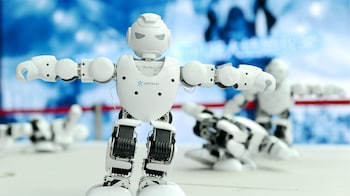
A humanoid robot stole the spotlight at China’s World AI Conference by twisting a balloon into the shape of a dog, a simple demonstration that highlighted growing precision in next‑generation machines.
## A small feat, visible progress
The balloon‑dog demonstration captured visitors’ attention not for its novelty but for the level of dexterity it displayed. The act underlined how robots that resemble humans are increasingly able to perform delicate, fine‑motor tasks that were once difficult for machines.
## What enabled the stunt
Experts say the performance reflects concurrent advances in robotic hands, sensors and AI‑powered control systems. Improvements in grippers and tactile sensing give robots finer manipulation skills, while more sophisticated control algorithms allow for smoother, more reliable motion — factors that together make tasks like balloon twisting possible.
## Why it matters beyond the show floor
While twisting a balloon dog is itself harmless entertainment, the underlying capabilities demonstrated are relevant to real‑world applications that require precision and adaptability, from assembly of small components to handling fragile objects. The demonstration at the World AI Conference served as a clear, public illustration of that technical progress.
The robot’s brief performance offered conference visitors a tangible example of how hardware and software advances are converging to expand the practical abilities of humanoid systems. Experts quoted at the event framed the spectacle as a sign of incremental but meaningful gains in robotic manipulation.
