

Embodied intelligence is gaining ground across industry, retail and the home, driven by attention-grabbing demos and sharply higher official figures. Between January and May 2026, sector revenues jumped 22.4% year‑on‑year, following 13.9% growth for all of 2025, while industrial purchases of embodied‑intelligence robots more than tripled over the same period.
Des demonstrations showing the shift to robotic “colleagues”
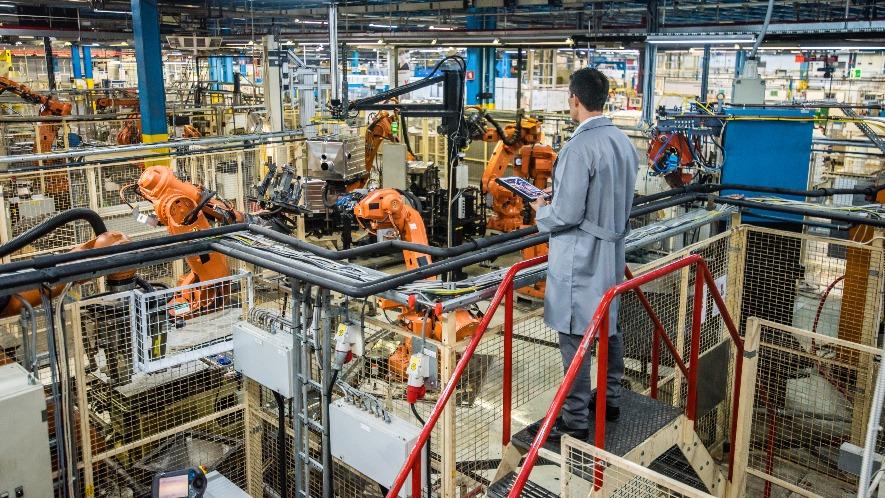
At the World AI Conference 2026 in Shanghai, booths staged the transition from tool to autonomous actor. Shanghai TARS Robotics set up a mock assembly line where robots stack batteries, affix headlamps and route cables, demonstrating machines’ ability to perceive their environment and adapt without constant supervision. In another space, Fourier staged “A Day with the Robot Butler,” a living‑room set where its humanoid GR‑3 performs tasks—locating a bottle, planning a path and handing it to a visitor—based solely on natural language instructions.
The GR‑3 runs on a semantic execution hub that integrates large language models, 3D mapping, navigation planning and control execution via Fourier’s centralized FOCUS platform. The architecture aims to close the loop between cognition and physical action and to enable real‑time coordination: when two robots cross paths, priority is assigned according to mission urgency to avoid collisions.
Numbers and public targets: a state strategy
The rise of embodied intelligence is accompanied by an explicit national strategy. The sector was included for the first time in the medium‑ and long‑term industrial roadmap in the 2025 proposal for the 15th Five‑Year Plan, and was cited in 2026 as a new growth engine. A State Council document sets ambitious targets: adoption rates for next‑generation intelligent terminals and AI agents should exceed 70% by 2027 and 90% by 2030.
Locally, Shanghai is targeting deployment of 100,000 humanoid robots in industrial settings by the end of the 15th Plan period (2026–2030), and expects AI agent adoption to exceed 80% in large industrial enterprises.
Consumer‑facing use cases that draw attention
Democratization is also visible in retail spaces. Unitree Robotics opened an experience store in Shanghai, attracting families and tourists with demonstrations of humanoid robots and robot dogs that can climb, jump and execute fluid movement sequences. The small 100‑square‑meter showroom displays consumer‑oriented models—G1, R1 and Go2—and offers a first hands‑on glimpse of devices that could eventually enter households.
A visitor quoted on site, Alex Butler, highlighted the spectacle: he described the humanoid choreographies as “very realistic” and considers them an important milestone for humanoid robotics.
Economic reality and technological limits
However, several experts temper the enthusiasm. Zhou Aimin, dean of the AI for Education Institute at East China Normal University, notes that the…
