

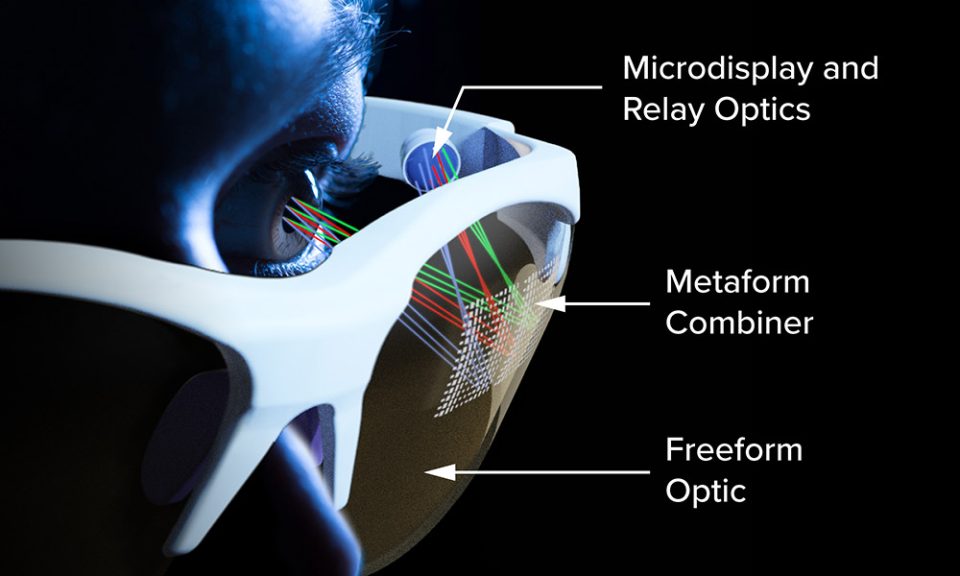
Meta unveiled its first virtual reality device, the Meta VR Glasses, a glasses-form VR headset positioned as a rival to Apple’s Vision Pro and Samsung’s Galaxy XR. Priced at $1,299, the Meta VR Glasses will launch in Spring 2027 and were announced alongside four new smart glasses.
Meta VR Glasses design and weight
The Meta VR Glasses weigh just 100 g, more than seven times lighter than the Apple Vision Pro (750–800 g) and about five times lighter than the Galaxy XR (545 g). Meta reduced weight by moving the processing unit to an external battery pack that powers the glasses.
Display, audio and tracking
The glasses use dual micro-OLED screens with a 120 Hz refresh rate and a combined 5K resolution, listed as 2,412 × 2,288 pixels per eye, and support Dolby Vision HDR and IMAX Enhanced content. The field of view is 70° horizontal by 66° vertical, with a pixel density of 37 pixels per degree. Audio is delivered with Dolby Atmos spatial sound.
Interaction and tracking include six outward-facing cameras for hand gesture control and four inward-facing cameras for eye tracking; Meta also says users can type using a virtual desk keyboard. Biometric authentication is provided via iris recognition.
Hardware, software and connectivity
The device is powered by the Qualcomm Snapdragon Reality Elite processor, equipped with 12 GB of RAM and 128 GB of internal storage, and storage can be expanded by up to an additional 1 TB via microSD. The glasses run Meta Horizon OS, which is based on the Android Open Source Project (AOSP).
Connectivity options include Wi‑Fi 6 and Bluetooth 6.0. The glasses can connect to Mac and Windows PCs to create a multi-panel extended virtual screen. Supported experiences include holographic video calling, media streaming through apps such as Disney+, gaming via the Meta Quest library and Xbox Cloud Gaming, and video calls through WhatsApp and Zoom.
Battery life is claimed to reach up to 3 hours of mixed usage during high-resolution media playback, and the system supports 45 W fast charging.
