

WASHINGTON, D.C., October 7, 2026 — The Food and Drug Administration’s Center for Tobacco Products (CTP) is reworking how it reviews Premarket Tobacco Product Applications (PMTAs), seeking greater predictability, category-specific review tools and clearer life‑cycle pathways while stressing that the Agency’s public‑health standard remains unchanged. The agency announced on September 28 that it will evaluate changes to the PMTA framework, and CTP officials detailed priorities and operational shifts at the New Approaches Summit on September 25 and the FDLI Tobacco and Nicotine Products Regulation and Policy Conference on October 6.
CTP priorities and the case for PMTA reform
Bret Koplow, formally appointed director of CTP in September after serving as acting director since 2025, told audiences the center now frames its work around four priorities: preventing youth initiation; helping adults who smoke quit or completely switch to lower‑risk alternatives; improving understanding of relative risk among consumers and health professionals; and reducing the prevalence of unauthorized products. Koplow said the PMTA pathway is “predicated on tobacco harm reduction.”
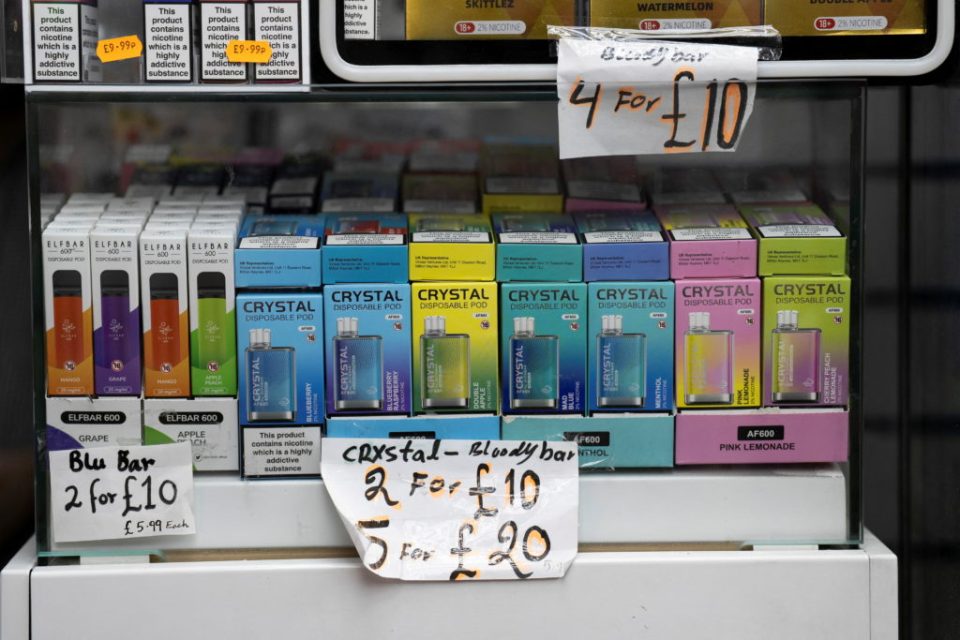
CTP officials have pointed to a large unauthorized market as part of the problem: Koplow cited data showing unauthorized products accounted for almost 70% of U.S. e‑cigarette sales in tracked convenience and grocery channels as of December 2025. He also highlighted falling public understanding of relative risk — the share of U.S. adults perceiving e‑cigarettes as less harmful than cigarettes declined from about 51% in 2012 to under 17% in 2022 — and noted roughly 2 million U.S. middle and high school students still reported current use of a tobacco product in 2025.
PMTA Review Reconsidered
CTP officials said the existing PMTA rule was finalized before the agency had practical experience reviewing the large volume of submissions that followed, and that many early applications lacked basic information needed for scientific review. FDA’s September 28 announcement called for evaluating possible rulemaking to modernize the PMTA framework to better reflect market realities and provide greater clarity and predictability. The current PMTA rule remains in effect while FDA considers changes.
Officials framed reform as both a regulatory‑design and capacity problem. CTP currently has only nine PMTA scientific review teams and has said it would like to more than double that number. Koplow tied staffing limits in part to personnel authorities — other FDA centers can use the Title 21 Alternative Pay and Personnel System, which CTP cannot — and said addressing that difference would require congressional action.
Category‑specific review and the nicotine‑pouch pilot
CTP is moving away from a strictly one‑size‑fits‑all review model. Koplow said “one size doesn’t necessarily fit all” for scientific review and pointed to the nicotine‑pouch pilot as a model to build on where appropriate: CTP authorized 23 products through that pilot and is applying lessons — including streamlined internal review templates and category‑specific filing questions — to other categories where scientifically reasonable.
Office of Science officials cautioned that category tools are not the same as category‑level authorization: broader reliance on category knowledge requires a sufficiently stable scientific understanding of that category, and ENDS still encompass a range of products that cannot be treated as homogeneous.
Focusing on decision‑relevant evidence
CTP is trying to sharpen what it asks applicants to provide. Todd Cecil summarized the issue: “What do you need to see? And not just what do you want to see — what do you need to see.” The center said it will emphasize evidence tied directly to regulatory decisions, increase use of consensus‑based scientific standards where suitable, and explore validated modeling as a way to draw information from multiple studies — but only if validated and without compromising the scientific standard.
Officials stressed that guidance may describe preferred methods, but “If it’s not in a regulation, it is not a requirement,” and applicants may propose alternative scientifically justified approaches.
Predictability, timelines and AI
CTP described measurable improvements in application backlogs while noting remaining queue challenges. At the start of 2025, CTP had roughly 450,000 pending PMTAs; by September 1, 2026 that number had fallen to about 135,000, a decline of roughly 70%. Applications awaiting an acceptance determination fell from about 26,000–30,000 at the start of 2025 to around 600 by September 1, 2026. Despite that progress, officials said queues remain between review stages and that internal timeframe metrics begin when filing or substantive scientific review actually starts.
CTP officials said they are working toward end‑to‑end, or “cradle‑to‑grave,” tracking of review timelines and discussed a longer‑term goal of achieving a 180‑day review period measured from a complete application. Koplow also said CTP is using artificial‑intelligence tools to support some review work but that regulatory decisions remain with CTP staff.
Life‑cycle regulation and the sPMTA pilot
CTP is placing greater emphasis on product modifications after authorization. The supplemental PMTA (sPMTA) pilot sorts modifications into broad buckets — described as minor, moderate and complex — and generally uses a single review cycle; CTP has typically not issued deficiency letters that would allow a second round to fill gaps. Cristi Stark said the pilot allows applicants to rely on information from an already authorized product where they can justify that the information remains relevant, but that the sPMTA remains subject to the same “appropriate for the protection of the public health” (APPH) standard as a full PMTA.
Officials urged manufacturers to plan for alternate suppliers, container‑closure changes and other foreseeable modifications in their initial applications so the center can evaluate those scenarios upfront. They warned that supply‑chain changes occurring while an application sits in queue can create situations in which the changed product requires a new application. They also noted nicotine‑related changes — concentration, salt, source or pH — can affect whether previously reviewed data can be bridged to a modified product.
Operational constraints and messaging to industry
CTP used the meetings to explain its own limits as well as its expectations for industry. The center reported more than 50,300 pending Substantial Equivalence (SE) reports at the start of September and said it is grouping similar applications into larger “mega‑bundles” rather than processing small batches sequentially.
Officials encouraged early engagement, stronger upfront science, and complete submissions. Stark advised companies not to wait until the end of response windows to seek extensions and to “engage with us in that first week,” explaining that extension requests should include a testing and response plan. Matthew Farrelly said CTP “could do better and should do better” in pre‑submission communication but also drew a line: “We’re not your consultant.”
What has not changed
CTP emphasized that the APPH standard and youth protection remain central to product evaluations. The agency has not announced a category‑based authorization system, and officials said streamlining does not mean lowering the scientific standard. What is changing is the machinery around that legal standard: more tailored category questions, greater use of accumulated scientific knowledge and validated methods, clearer expectations for applicants, proportionate supplemental pathways, and improved timeline tracking.
Whether those changes deliver a more effective regulated market will depend on staffing, institutional authority, the quality of industry submissions and whether the described improvements can withstand large application volumes. CTP officials said they want to work with companies that meet regulatory requirements and invest in the science and controls the agency expects.
The agency’s PMTA framework review and the outcomes of ongoing pilots will continue to shape how tobacco and nicotine products move from application to the legal market under the existing public‑health standard.
