

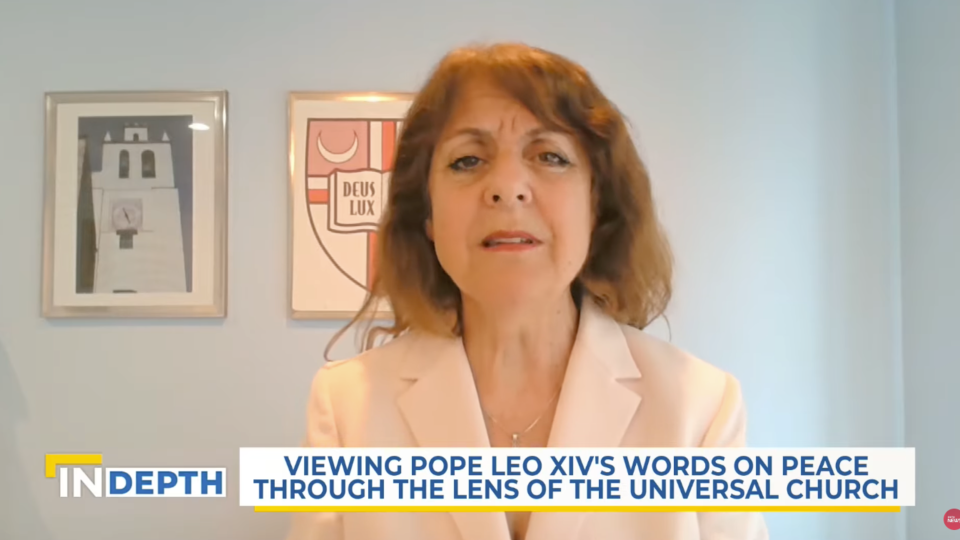
A Vatican summit on nuclear weapons and artificial intelligence underscored Pope Leo’s sustained emphasis on peace-building and his call for the global elimination of nuclear arms, a participating Catholic scholar said.
Maryann Cusimano Love, chair of the politics department at The Catholic University of America, told reporters that the pope has consistently prioritized peace since the start of his papacy and has raised alarm about the risks of integrating AI into military systems. A Vatican-published volume released July 21 compiles the pontiff’s writings and speeches on peace; Pope Leo wrote the foreword and reiterated the need to eliminate nuclear weapons worldwide.
## Pope Leo’s sustained peace message
Love said the summit reflected a continuity in the pope’s messaging: peace is both practical and achievable. She noted the timeliness of that stance amid a rise in the number and deadliness of global conflicts and the emergence of new technologies that change how wars are fought. The pope’s writings, now collected by the Vatican, frame disarmament as a moral and practical imperative.
## AI, drones and the changing face of warfare
Participants at the Global Nobel Laureates Assembly on Artificial Intelligence and Nuclear War, held July 14–16, warned that advances in AI—particularly in autonomous drones and lethal autonomous weapons systems—compound the dangers posed by nuclear arsenals. The assembly adopted the Rome Declaration for an Unarmed and Disarming Peace, which highlights how technological development can intensify and complicate warfare.
Love emphasized that the addition of AI to military ecosystems increases the urgency of nuclear disarmament and raises new questions about safety, accountability and the sharing of technical vulnerabilities between technology firms and the public.
## Calls for restraint and transparency
Speakers at the summit urged a cautious approach to deploying AI in military contexts. Love said the call is for responsible use and a slowing of integration until systems’ vulnerabilities and blind spots are better understood and publicly disclosed. That, she argued, would allow for safer information-sharing and reduce the risk of unintended escalation stemming from automated or opaque systems.
The summit drew more than 200 academics and experts and was inspired in part by the pope’s encyclical Magnifica Humanitas, which warns against delegating life-and-death decisions to AI in warfare.
The Vatican’s recent publications and the outcomes of the assembly reinforce a clear line from the pontiff: advancing peace requires both the elimination of nuclear weapons and strict limits on how AI is incorporated into military systems.
