

On November 20, 2026, mathematician and Anthropic researcher Levent Alpöge announced that he believes he has discovered a proof of the Riemann Hypothesis in collaboration with Claude, Anthropic’s artificial intelligence system. Alpöge also said his approach extends to the Generalized Riemann Hypothesis. The announcement is presented as a claim pending independent verification.
Riemann Hypothesis: historical context
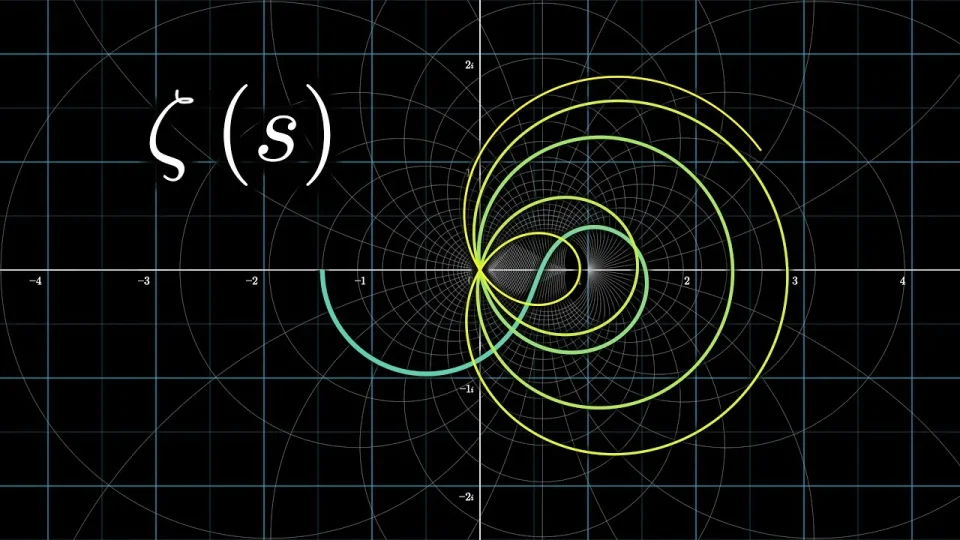
First proposed by Bernhard Riemann in 1859, the Riemann Hypothesis concerns the distribution of prime numbers and asserts that every nontrivial zero of the Riemann zeta function has real part equal to one-half. The conjecture has shaped generations of research in analytic number theory, mathematical physics, random matrix theory and computational mathematics, and is one of the Clay Mathematics Institute’s seven Millennium Prize Problems, with a $1 million prize for an accepted solution.
Claude’s role and the claimed method
Alpöge described a collaborative process in which his own mathematical intuition set the research direction and Claude developed increasingly sophisticated arguments, writing that “Claude far outpaced me near the finish line.” According to Alpöge’s account, the proposed proof draws on a wide range of disciplines including Fourier analysis, automorphic forms, Stepanov’s method, repeated applications of theta lifts, algebraic geometry and relative trace formulas. One reported development involved repeatedly applying theta lifts to reproduce mathematical properties analogous to multiplicity that appeared in earlier proofs for function fields. Alpöge identified November 15 and 16, 2026, as the dates when decisive breakthroughs occurred.
Formalization in Lean and the need for scrutiny
Alpöge has released a formalization of the proposed proof using Lean, a computer-based theorem prover that verifies arguments against explicit logical rules. The use of Lean is presented as a distinguishing feature compared with conventional AI-generated mathematical work, which can contain subtle but serious errors despite appearing convincing. Independent mathematicians must still examine whether the formalization exactly establishes the intended theorem and whether its definitions and logical foundations are sound. The announcement is therefore a claimed breakthrough, not a universally accepted mathematical result.
Connections to finance, physics and wider significance
The Riemann Hypothesis has known connections to quantitative finance through statistical relationships between zeros of the zeta function and eigenvalues of random matrices; random matrix theory is also used in portfolio construction, covariance estimation and market analysis. Commentaries in the announcement note that a proof would not immediately revolutionize financial trading, but that the mathematical techniques arising from such a discovery could eventually inspire new computational approaches. More broadly, the claim highlights a potential turning point for artificial intelligence: if the proof withstands mathematical scrutiny, November 2026 could be remembered as a moment when AI became a genuine partner in a fundamental scientific discovery.
