

Jensen Huang’s unceremonious departure from NVIDIA has introduced short-term instability at the company and, according to KB Securities, could open opportunities for Samsung in the high-bandwidth memory market.
KB Securities said Huang’s exit may weaken NVIDIA’s dominance in the global AI semiconductor market, prompting greater market diversification as hyperscalers such as Google, AWS and AMD pursue rapid development and commercialization of their own AI accelerators. That shift, the firm added, could erode NVIDIA’s lead and redirect demand for HBM chips to a broader set of suppliers.
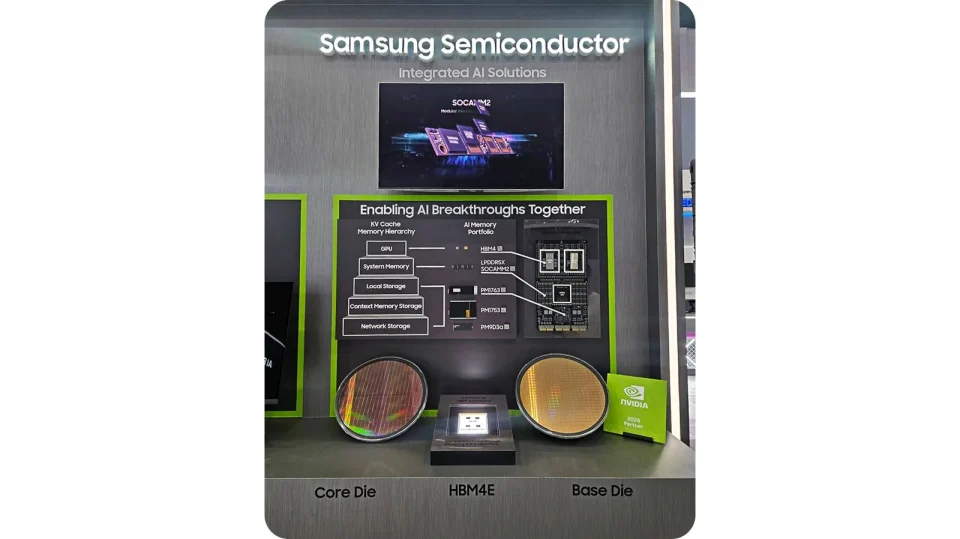
Samsung poised to increase HBM shipments
KB Securities expects Samsung’s shipment ratio to be 35% for NVIDIA customers and 65% for non-NVIDIA customers, a split that could allow Samsung to grow its share if non-NVIDIA demand expands. Increased orders from cloud providers and other accelerator developers would raise overall demand for high-bandwidth memory, presenting a supply opportunity for Samsung.
Samsung has previously faced challenges obtaining NVIDIA approvals for its HBM3E chips, a difficulty that allowed cross-town rival SK Hynix to establish dominance in the high-bandwidth memory space.
