

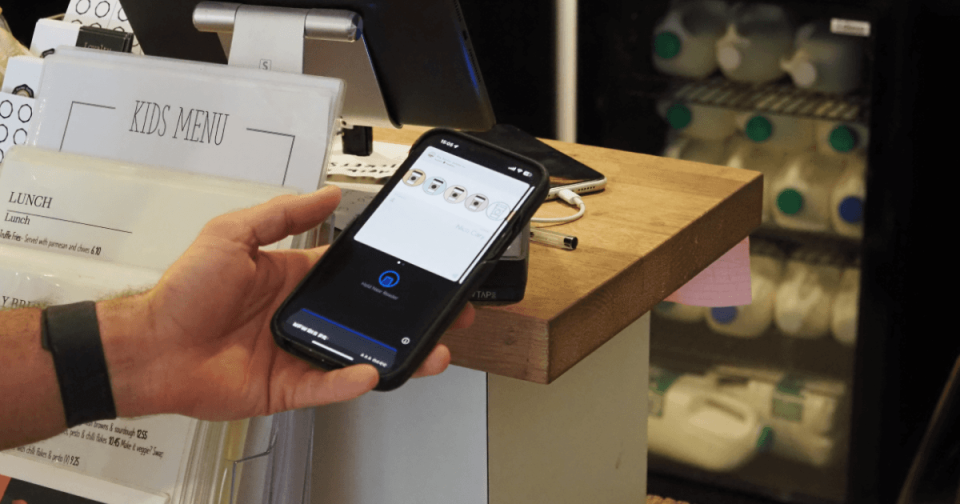
Apple is expanding the use of Tap to Pay on iPhone inside its retail locations by equipping more staff with newer devices. The move aims to streamline in-store checkouts and reduce reliance on extra card-readers, while improving reliability for a wider range of contactless payment methods.
## What Tap to Pay on iPhone does
Tap to Pay on iPhone lets merchants accept contactless payments directly on an iPhone using NFC. Customers can complete transactions by tapping an iPhone, Apple Watch, or a contactless card against the merchant’s device, without separate point-of-sale hardware.
## Why newer iPhones matter
Earlier in-store tests used iPhone 14 units, but those handsets sometimes struggled with certain metal cards. The iPhone 16 reportedly improves NFC performance and compatibility with cards that have heavier metal components, reducing read failures and speeding transactions.
## How stores are changing checkout
By replacing Bluetooth card readers affixed to devices with native Tap to Pay functionality, retail employees carry fewer accessories and enjoy a simpler workflow. The iPhone itself becomes the terminal, allowing staff to accept contactless payments wherever they are on the sales floor.
## Security and technology
Transactions use NFC and built-in security features to protect payment data, much like Apple Pay. No additional hardware is required on the merchant side, which lowers setup costs and simplifies maintenance for Apple Stores and small businesses alike.
## iOS 27 and new capabilities
iOS 27 builds on Tap to Pay with a complementary “Tap to Share” feature, further integrating contactless interactions and expanding possibilities for in-store exchanges of information and payments.
## Benefits and potential limits
The shift promises faster checkouts, fewer accessories for employees, and broader card compatibility. However, rollout speed, staff training, and handling edge cases—such as legacy cards or regional payment systems—will influence how quickly the experience improves for all customers.
This expansion highlights Apple’s push to make iPhones a complete point-of-sale solution in its own stores, with implications for retailers and merchants who may follow suit.
