

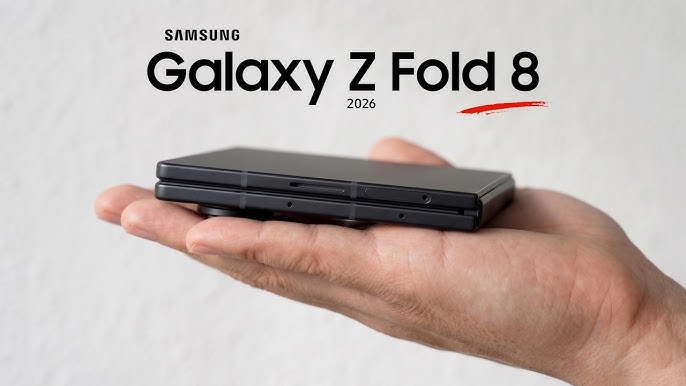
Samsung unveiled the Galaxy Z Fold 8 alongside the Galaxy Z Fold 8 Ultra and the Galaxy Z Flip 8. While the Ultra remains the foldable flagship, the Galaxy Z Fold 8 stands out for a complete rethink of the form factor that makes it more practical for everyday use: a wider cover display, reduced footprint and an unexpectedly low weight.
A redesign focused on everyday use
The Galaxy Z Fold 8 breaks with the tall, narrow proportions of previous generations. Closed, it offers a 5.5-inch cover display in a 16:10 aspect ratio — wider and more natural for browsing, social media and reading without unfolding the device. Unfolded, it becomes a compact tablet with a 7.6-inch panel approaching a 4:3 ratio. Despite the larger displays, the device weighs just 201 grams, making it Samsung’s lightest book-style Fold to date.
An internal screen engineered for versatility
The main display benefits from a noticeably less visible crease thanks to a new internal structure — including a titanium-alloy plate beneath the panel — which also improves durability. Peak brightness reaches 3,000 nits and an anti-reflective treatment should help outdoor usability. These choices make the large interior screen more compelling for reading, video playback and short-form content consumption.
Performance, battery and open questions
The Galaxy Z Fold 8 is powered by the Snapdragon 8 Elite Gen 5 for Galaxy and packs a 4,800 mAh battery with 45 W wired charging support. Samsung introduces a silicon-carbon battery chemistry for the first time, used selectively to preserve longevity; the company is promising six to seven years of Android updates for the device. This new chemistry lets Samsung increase capacity while keeping a slim profile, but real-world performance and long-term durability will need to be validated in full reviews.
Photo and video: 50 MP dual setup and AI features
The camera system centers on a dual 50 MP rear setup (the main sensor shared with the Galaxy S26/S26+, and the ultra-wide derived from the S26 Ultra sensor). Selfies are handled by two 10 MP cameras — one on the cover display and one under the inner screen, the latter offering a wider field of view similar to the Fold 7. Samsung is also introducing new video and AI-focused software features, though the Fold 8 doesn’t receive the top-tier imaging hardware reserved for the Ultra model.
One UI 9 and the end of Flex Mode on this model
The Galaxy Z Fold 8 ships with One UI 9 and retains the core foldable features, including the ability to use the rear cameras for higher-quality selfies. However, the new hinge no longer supports intermediate angles: once opened beyond a certain point the device folds fully flat, eliminating Flex Mode experiences on this model. Those features remain available on the Galaxy Z Fold 8 Ultra.
First impressions
The Galaxy Z Fold 8 feels like the most significant rethink of the Fold line since its inception: rather than pushing photography or productivity-first upgrades, Samsung appears to prioritize portability and daily ergonomics. The wider cover display, light weight and reduced footprint make it a much more approachable and practical foldable for everyday use.
