

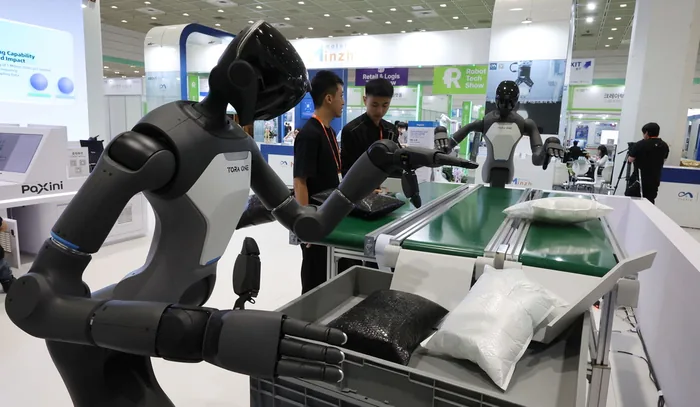
South Korea’s drive to master core technologies in AI robotics is creating new avenues for cooperation with Vietnam in hardware manufacturing, software development, technology testing and human resources training, Dao Tuan Hung, president of the Business Association of Vietnamese in Korea (BAViK), said in Seoul.
He said the South Korean strategy goes beyond increased automation to mastering Physical AI and the full hardware–software value chain of next‑generation robots. Vietnam should take a practical approach by prioritising specialised robots—such as autonomous mobile robots (AMR/AGV), collaborative robots and machine vision systems—in sectors with clear automation demand.
Target sectors, he said, include agro‑fishery processing, textiles and garments, electronics and logistics. Those industries can help firms accumulate real‑world operational data, an essential resource for training Physical AI models.
AI robotics cooperation model
Hung outlined a cooperation model that pairs South Korean hardware with Vietnamese software intelligence. He noted Korean strengths in precision mechanics, actuators, sensors and hardware manufacturing, and highlighted Vietnam’s large pool of IT engineers experienced in embedded software, computer vision, digital twin simulation and algorithm testing. Combining these capabilities could yield cost‑competitive AI robotics solutions for Vietnam and wider Southeast Asian markets.
Testing grounds and skills development
He proposed turning major foreign‑invested industrial complexes in Vietnam—particularly those run by Korean groups such as Samsung, LG, Hyundai and Doosan—into ‘living laboratories’ where companies from both countries jointly develop and validate smart robotics solutions. Such sites could also open opportunities for Vietnamese supporting‑industry suppliers and system integrators to join Korean high‑tech supply chains.
Hung further stressed the need to expand practical training beyond high‑level AI researchers to include system integration engineers, motion‑control programmers and technicians who operate and maintain industrial robots. He said BAViK and networks of Vietnamese experts and intellectuals in South Korea could act as bridges connecting Korean research institutes, universities such as KAIST and KIST, and DeepTech startups with Vietnamese businesses and localities to promote demand‑driven R&D projects and accelerate technology transfer between the two countries.
