

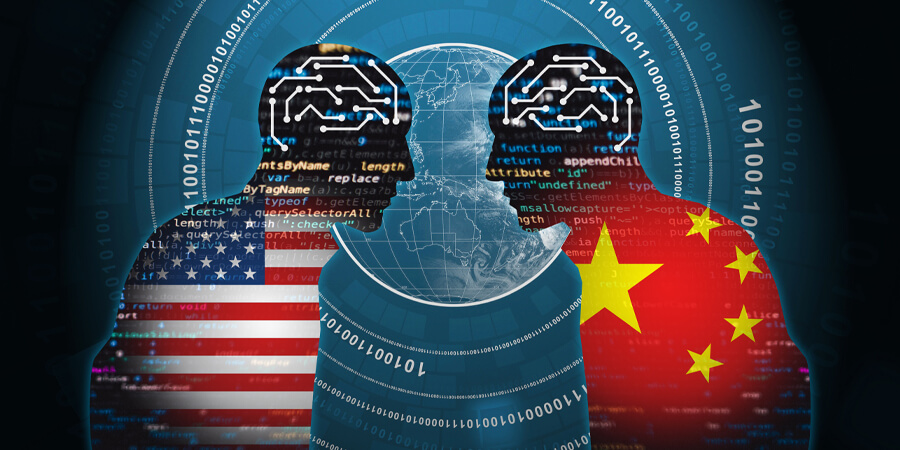
U.S. lawmakers warned at a congressional hearing on Thursday that delays in building American AI infrastructure could let China take the lead in the AI race, a concern raised just days before a deadline for new industry guard rails.
Senator Ted Cruz, chair of the Senate Commerce, Science and Transportation Committee, told the panel: “We are in a strategic competition with China to lead the world on AI, and winning that race requires massive capital investment to build the networks that will power tomorrow’s AI applications.” The hearing focused on the impact of AI on U.S. infrastructure and the need for strong, high‑speed networks to support future applications.
Why data centres are central to the debate
Data and computing centres were a central element of the discussion, described by witnesses as critical to AI development in both the United States and China. Lawmakers and experts flagged the rapid expansion of U.S. data centres as a flashpoint, with local communities raising concerns about their consumption of water and electricity, environmental impacts and, in some cases, a lack of public consultation.
“This data centre buildout has no coherent governance strategy at all and it’s provoking real backlash around the country,” said Asad Ramzanali, director of AI and technology policy at the Vanderbilt Policy Accelerator, during testimony to the committee.
Networks, governance and the narrow margin before guard rails
Witnesses told the committee that winning the AI race depends not only on compute capacity but also on the networks that connect users, data and cloud infrastructure. The hearing occurred days before a scheduled deadline for releasing new industry guard rails, underscoring lawmakers’ sense of urgency about coordinating investment, regulation and public engagement around AI infrastructure.
The testimony emphasized both the technical requirement for high‑speed networks and the political challenge of balancing local concerns with national strategic goals. Lawmakers framed the issue as a strategic competition with China that could be affected by how quickly and coherently the United States builds and governs its AI backbone.
The path ahead
The hearing highlighted a narrow policy window: officials called for clearer governance and faster deployment of networks and data capacity, while witnesses warned that continuing public backlash and fragmented oversight could slow progress. With new guard rails imminent, senators and experts said addressing infrastructure bottlenecks will be crucial to maintain U.S. competitiveness in the AI race.
