

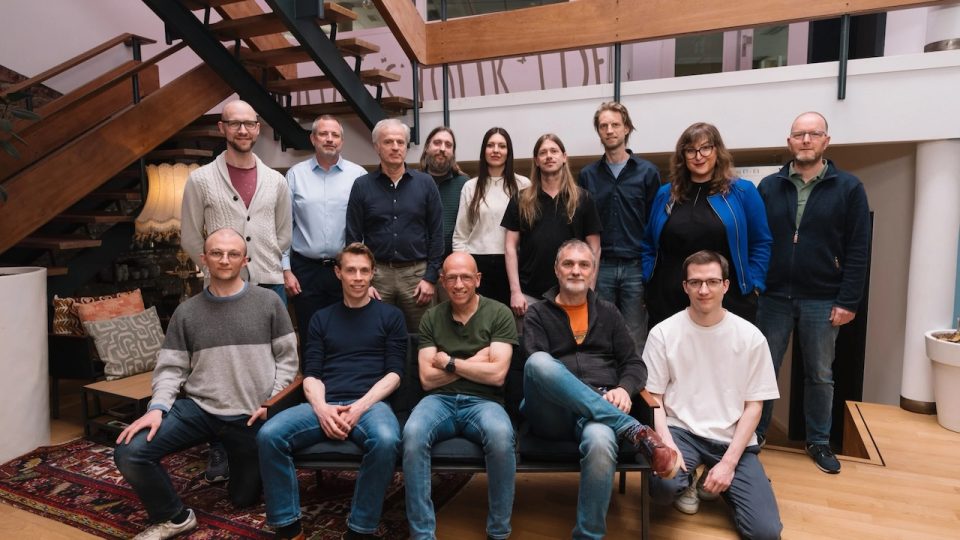
Modern chips face a significant measurement challenge due to their increasing complexity. As logic and memory devices become more intricate, stacking in three dimensions and shrinking to nanometer scales, traditional optical tools struggle to inspect the internal structures of these chips. Invisix, a startup from Eindhoven, aims to address this issue by raising €20 million in funding. This oversubscribed seed round included investments from Hitachi Ventures, Transition Ventures, imec.xpand, Doosan Investment Co., and a major semiconductor manufacturer, speculated to be Samsung, which is interested in improving yields for its 2nm process.
The core problem Invisix targets is related to yield, a critical factor in semiconductor manufacturing. Chips are constructed layer by layer, and without verifying each layer before proceeding, manufacturers risk costly errors. Current methods often involve slow and destructive inspections that can hinder production efficiency.
Invisix offers a novel solution by utilizing high-harmonic generation, a technique recognized by the 2023 Nobel Prize in Physics. This method uses a short-pulse laser to excite noble-gas atoms, emitting soft x-rays across multiple wavelengths, allowing for detailed 3D imaging without damaging the chip. The company combines this technology with advanced reconstruction algorithms and machine learning to visualize a chip’s internal structure.
Invisix benefits from a significant technological foundation, having licensed a soft x-ray technology package developed over a decade at ASML. The startup’s team includes experienced professionals from this program, along with strategic hires like COO Roald Dogge.
The company has already demonstrated its approach with industry leaders Intel and imec, successfully measuring challenging features in advanced transistors. As Europe seeks to maintain its position in the semiconductor supply chain, Invisix stands out with its promising technology and strong backing. The challenge now is to transition from demonstration to a scalable solution that can be widely adopted in semiconductor manufacturing.
