

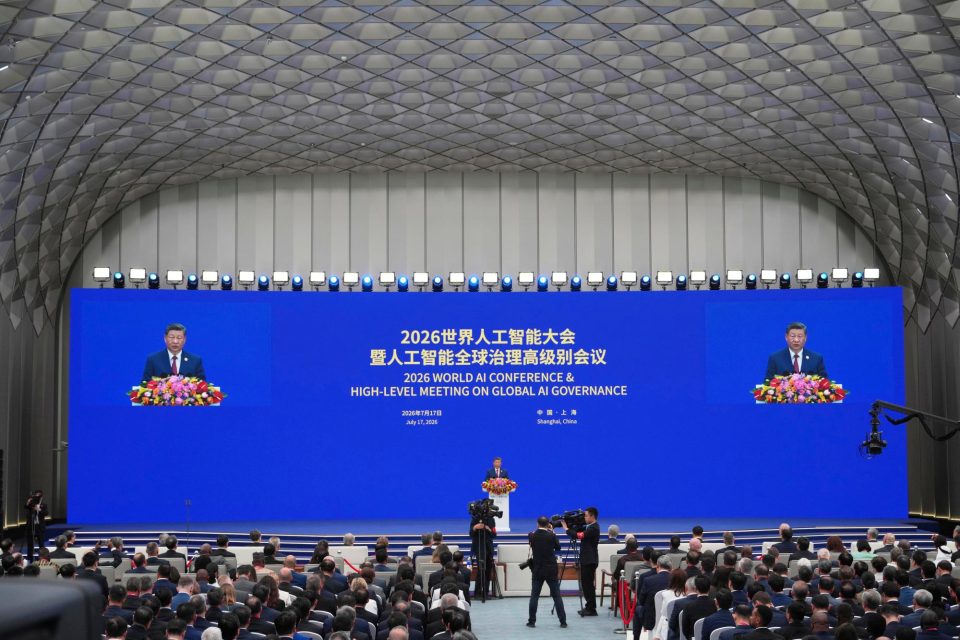
Shanghai’s World AI Conference closed Monday after four days of exhibitions and panels, culminating in signed projects worth more than ¥20 billion (about $2.95 billion). The event highlighted both major commercial deals and technical advances across AI and robotics.
Key figures from the conference
The event drew representatives from over 100 countries and international organizations, hosted 140 forum sessions, and gave more than 1,100 companies a platform to showcase over 3,000 products. In total, 4,486 exhibits were on display, including 351 global premieres. On the commercial side, 177 purchasing delegations attended, with declared purchase intentions totaling roughly ¥20.36 billion—up 25% year‑over‑year.
Robots and models take center stage
Speakers emphasized progress in foundation models and robot integration. Zhou Bowen, director and chief scientist at the Shanghai AI Laboratory, highlighted a “generalist‑specialist integration” approach that he says enables models to “possess long‑term independent reasoning capabilities” and to “navigate and explore autonomously under uncertainty.” One high-profile debut was a “centaur”‑type robot built for special operations—fire rescue and disaster response—that completed its world premiere and reportedly attracted about 100 potential orders during the four days on the floor. Zhou Bin, CEO of Shanghai Runke Juneng Technology, said the product generated strong interest and several intent‑to‑contract agreements, underlining a trend toward practical robotic applications.
Sector deals and industry outlook
Signed projects span multiple industries—smart manufacturing, healthcare, embodied intelligence, and spatial computing among them. Zhang Jianzhong, CEO and chairman of Moore Threads Technology, summed up the conference’s mood: “We are at the heart of an AI boom that is penetrating every industry. From content generation to AI agents, and soon to physical and embodied AI, AI must improve work efficiency and productivity.” He argued these developments will fuel economic transformation and create new high‑quality productive forces.
From prototype to product
Beyond announcements and demos, the World AI Conference underscored a clear push to convert research and prototypes into operational, commercial solutions. The signed deals and intent orders point to growing commercial momentum, while the showcased innovations reveal a shift toward more autonomous systems designed for real‑world use.
The event left a clear impression of an accelerating sector where practical deployment is becoming as important as theoretical progress—an inflection point for AI commercialization and embodied intelligence.
