

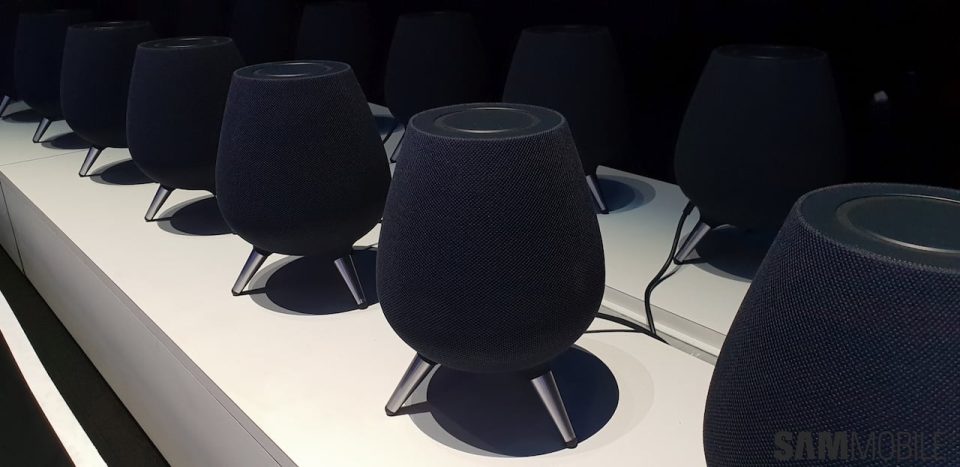
Samsung is the only one of the world’s four biggest smart home platforms that does not offer a dedicated smart speaker, despite having one of the broadest portfolios of first‑party smart home products and being the fastest to add support for the latest version of Matter. A Bixby‑powered Galaxy smart speaker would make the assistant more accessible and give users a simpler, more integrated way to control SmartThings devices.
Voice control is the simplest way to operate a connected home
Voice commands are often the quickest, most convenient method to control smart devices. Rather than unlocking a phone, opening an app and tapping through menus, users can ask a voice assistant to turn off lights, adjust an air conditioner or manage other devices. Smart speakers with built‑in assistants typically handle those everyday tasks faster than a phone.
Phones and appliances are not a substitute for a smart speaker
Samsung’s AI voice assistant is available on Galaxy phones, TVs and select home appliances, most of which cost upwards of $200. While people carry phones during the day, limiting Bixby to phones, TVs and appliances forces customers to buy relatively expensive hardware to access the assistant. An affordable smart speaker would provide a lower‑cost entry point into Samsung’s voice ecosystem. Smart speakers also offer far‑field microphones designed to pick up commands from across a room; phones do not hear distant commands as clearly and often require unlocking for security, making them less suitable for hands‑free home control.
Bixby’s device‑level controls argue for a first‑party speaker
SmartThings integrates with other services, including Amazon Alexa and Google Home, so third‑party phones and speakers can control many compatible devices. However, competing voice assistants often lack support for granular appliance features that Bixby can expose. For example, Bixby lets users adjust a Samsung air conditioner’s wind direction, a control that might not be available through Google Home. With Bixby recently upgraded using large language models (LLMs) and integrated with Perplexity to pull more detailed web information, a dedicated speaker could offer the most comprehensive way to control Samsung products.
Samsung has the audio expertise to compete
Consumers buy smart speakers for music, questions, reminders and everyday tasks as well as home control. Through its Harman subsidiary, Samsung owns 21 audio brands, including Harman Kardon, JBL, Bowers & Wilkins, Denon, Marantz and Polk Audio. That audio engineering heritage would allow Samsung to build a speaker that sounds competitive with Amazon Echo, Apple HomePod and Google Nest. A well‑designed Galaxy smart speaker could especially appeal to owners of Galaxy devices who want seamless integration within the Samsung ecosystem.
A Bixby‑powered Galaxy smart speaker would fill a notable gap in Samsung’s product lineup, broaden access to its voice assistant and offer a more integrated, hands‑free way to manage connected homes.
