

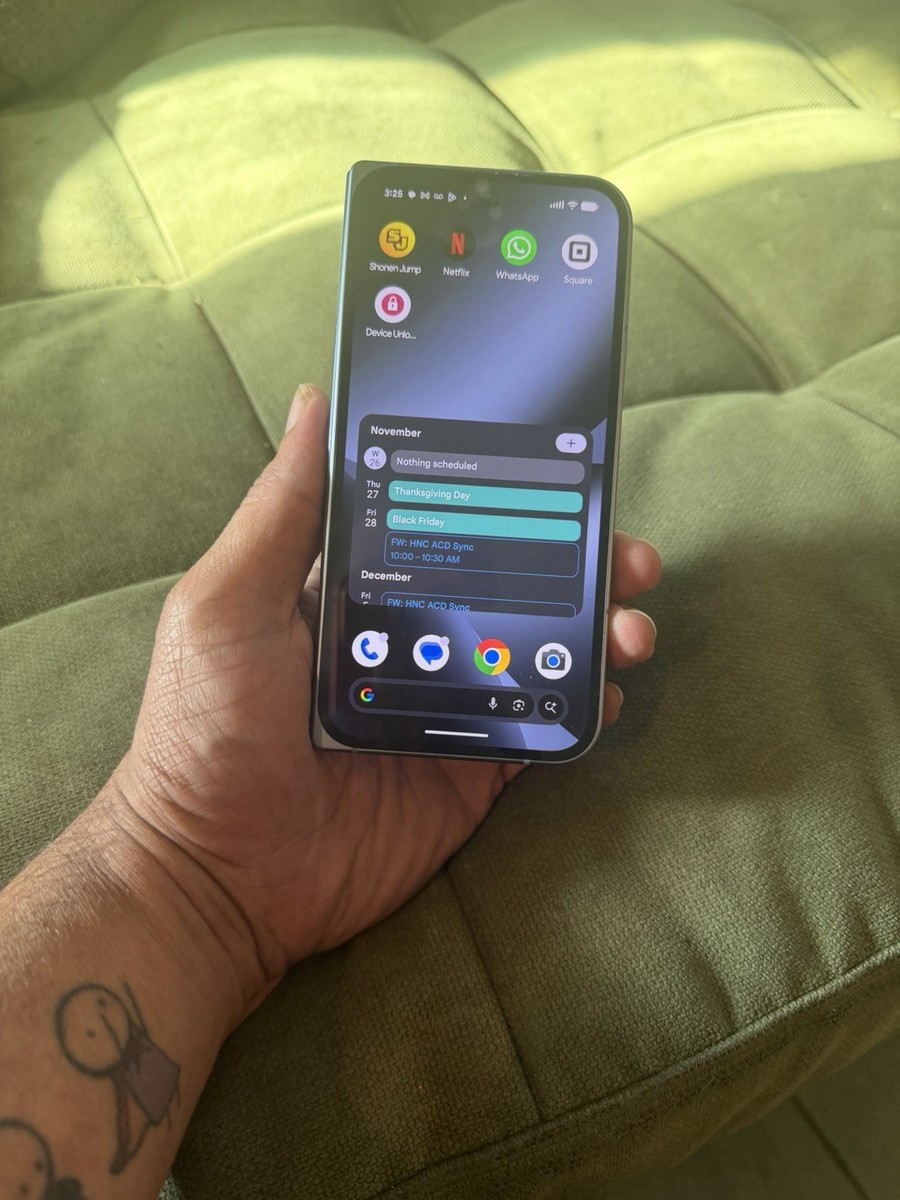
The author argues that the Galaxy Z Fold 8’s symmetrical cover-screen approach is objectively better than Apple’s asymmetrical iPhone Duo because it preserves ambidexterity and delivers greater design consistency across folded and unfolded modes.
How Samsung and Apple diverged on foldable design
Samsung approached its Fold series as a hybrid that should feel familiar to both Galaxy phone and tablet users, landing on a design that embraces symmetry and sharp corners for the cover and main screens. The author says this choice appears aimed at satisfying Galaxy Note and Galaxy S Ultra users who prefer squarer phones, as well as Galaxy Tab users who like square corners and may want a compact foldable tablet experience.
By contrast, Apple had fewer choices if it wanted a foldable that looked consistent with recent iPhones, which do not have square display corners, while iPads sit somewhere in the middle. The result was an asymmetrical design for the iPhone Duo that leans more toward the iPad’s familiarity and departs from the usual iPhone formula. The author notes Apple could have followed Google’s Pixel Fold path but chose a different compromise.
Galaxy Z Fold 8: symmetry, ambidexterity and consistency
According to the article, the Fold 8’s symmetrical cover screen yields practical advantages: it supports ambidextrous use, avoids a special UI that is awkward for left-handed users, and maintains better visual and functional continuity between folded and unfolded states and with non-foldable Galaxy phones and tablets. The author acknowledges that Galaxy Z Fold models are not entirely ambidextrous — the side-mounted fingerprint scanner can be harder to reach with a left thumb — but considers that a relatively minor drawback compared with the iPhone Duo’s limitations.
Where the iPhone Duo stands and remaining questions
The iPhone Duo is described as eye-catching and as doing certain things better than the Fold 8, but its asymmetrical cover screen required Apple to create a new on-screen control surface in iOS — including the home-screen app dock — that the author says was designed primarily for right-handed users. That, the author contends, represents a near-complete disregard for ambidextrous design and feels unlike Apple’s usual inclusiveness. The article suggests Apple could improve one-handed usability and left-hand reachability through software updates, but for now the asymmetry is a notable drawback.
The author concludes that, despite some first-generation shortcomings in the Fold 8 such as speaker placement and camera-housing design, Samsung’s symmetrical design formula offers an indisputable advantage the iPhone Duo lacks. The piece closes with the hope that Samsung will retain symmetry while refining the Fold series’ camera housing and speaker positioning rather than turning toward Apple-inspired asymmetry.
