

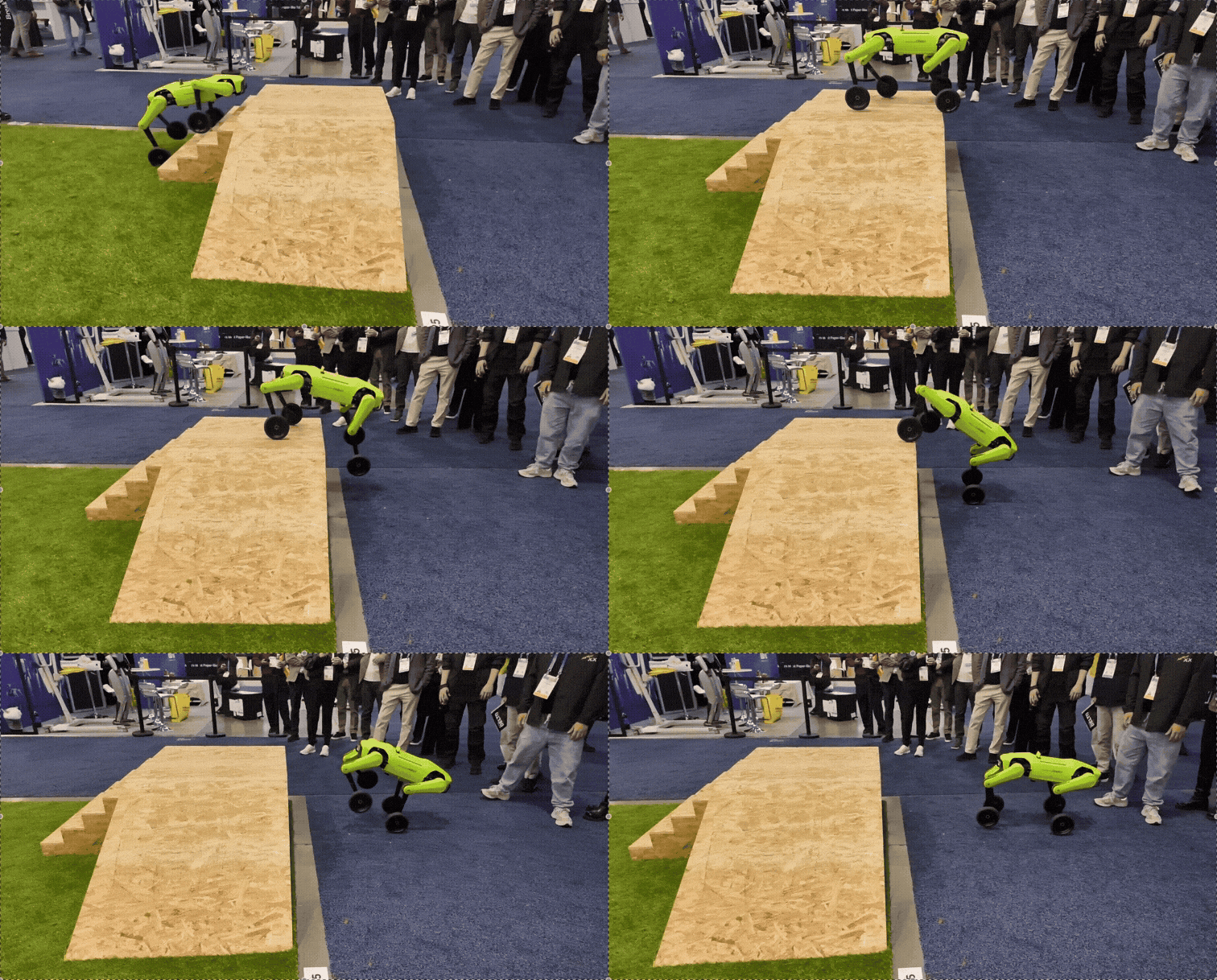
At the World AI Conference 2026 (WAIC) in Shanghai, young innovators faced off in the WAIC Young final by showcasing autonomous robot dogs that negotiated an obstacle course. The quadrupeds navigated fully autonomously, detecting barriers and mapping trajectories in real time.
Un autonomy and perception challenge
The demonstration emphasized end-to-end autonomous navigation: the robots identified obstacles along their paths and replanned routes without human intervention. Such trials test environmental perception and trajectory planning simultaneously — two critical capabilities for quadrupeds expected to operate outside tightly controlled settings.
The role of young innovators at WAIC Young
WAIC Young provided a platform for emerging teams that combined sensors and algorithms to enable the robot dogs to anticipate and adapt their movements. Real-world trials reveal the robustness of those solutions, particularly their ability to process sensor data on the fly and recompute trajectories in real time.
What the demonstration revealed
Beyond the spectacle, the event showcased tangible progress in onboard autonomy: rapid obstacle perception, instant mapping, and dynamic trajectory adjustment. These capabilities are decisive for future applications of quadrupeds, from inspections and assistance to interventions in complex environments.
The WAIC session highlighted the practical advances made by participating teams and the growing maturity of autonomous robot dogs for real-world navigation tasks.
