

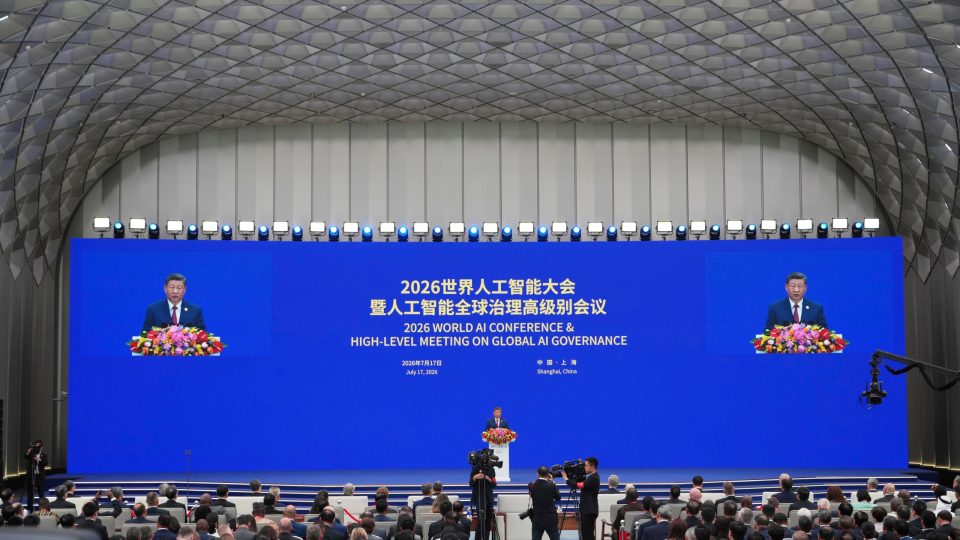
Xi Jinping chose to appear in person at the World AI Conference to deliver a rare public speech on artificial intelligence, laying out a vision in which humans must learn to work alongside “thinking machines” while, for the first time publicly, flagging the risk that AI systems could slip out of human control.
A vision centered on human–machine collaboration
In his remarks, Xi put integration, connectivity and collaboration at the heart of China’s AI strategy. These themes, already recurring in Communist Party policy, reflect expectations that intelligent systems — particularly embodied agents and physical AI, which featured prominently at the WAIC — will contribute to economic growth, development and social welfare. Speaking to both the nation and the international community, Xi framed the key question of his address: “How do we coexist with thinking machines?”
“Controllability”: a multifaceted refrain
“Controllability” (可控) has long been a recurring motif in China’s AI policy, but the term is deliberately polyvalent: it can mean political control, cybersecurity, or a preference for domestically developed technologies. In his speech, Xi reiterated that human mastery over technologies is a prerequisite for large‑scale deployment, without offering a single, narrowly defined meaning of what that control entails.
First public mention of the risk of “loss of control”
The most notable element of the speech was the explicit reference, in a public forum, to the risk of AI “losing control” (失控). This marks the first time Xi has publicly invoked this specific risk for AI systems, following earlier, more general warnings.
