

Market research firm IDC warns that Washington’s recent trade restrictions could shrink the U.S. humanoid robotics market by 58% versus a pre-restriction baseline by 2030, representing more than $6 billion in lost revenue and lowering the sector’s annual growth rate to about 9% from 13%.
On July 28 the Federal Communications Commission added “foreign-produced advanced robotic devices” to its Covered List, a move that prevents new models from obtaining the authorization required for U.S. imports and sales. Previously authorized models may still be imported and sold, and some software and firmware updates are allowed through at least Jan. 1, 2029. Vendors may also seek conditional approval for new models, subject to a national-security review and commitments to shift production to the U.S.
U.S.-based robotics companies rely on China and other non-U.S. manufacturers for parts such as motors and batteries. IDC says restrictions on those supply chains could raise costs and make it harder for American firms to scale production; some U.S. startups have even resorted to smuggling robot parts in their luggage, according to reports from early August.
IDC analysts wrote, “IDC’s trade policy model puts U.S. humanoid robot revenue 58% below the pre-restriction baseline by 2030.” The firm projects that this shortfall will reduce the sector’s growth and cited product life cycles as a key factor: humanoid robots typically have shorter life cycles than other robot categories, forcing manufacturers to update or replace models more frequently. By contrast, IDC projects the household cleaning robot segment will shrink by 18% by 2030, noting that cleaning robots benefit from a deep bench of already-certified models.
Some companies have received temporary relief. On Oct. 23 the FCC granted Intel Corporation a one-year waiver to continue updating and maintaining some of its robots after Intel argued its automated guided vehicles were essential to domestic semiconductor manufacturing and that no domestic alternative existed.
Global shipments and Chinese dominance of humanoid robots
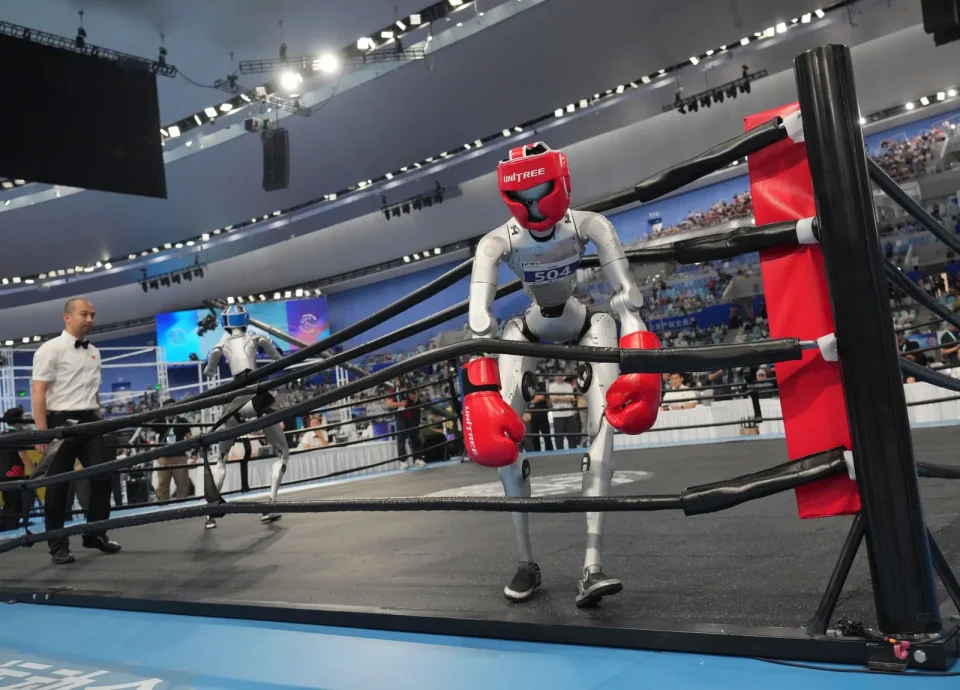
IDC projects the global market for humanoid robots will continue growing: vendors shipped an estimated 25,000 humanoid robots in the first six months of 2026, 26% more than the 18,500 shipped in all of 2025, and IDC expects more than 750,000 humanoid robots to be shipped by 2030. Chinese vendors, including Unitree and AGIBOT, account for roughly 95% of global humanoid shipments, while Chinese firms such as Roborock and Dreame Technology also lead the household cleaning robot market.
Competition from Chinese firms contributed to the bankruptcy of iRobot, maker of the Roomba, which was acquired by its China-based supplier Shenzhen Picea Robotics. In terms of consumption, IDC reports China and the U.S. accounted for about 21% and 18% of global consumption respectively, while Europe buys more than double the U.S. share.
